5 Ways Health Tech Improves PACE Program Efficiency
Explore how PACE program health tech and passive monitoring reduce unnecessary home visits, streamline care, and improve operational efficiency for senior care.
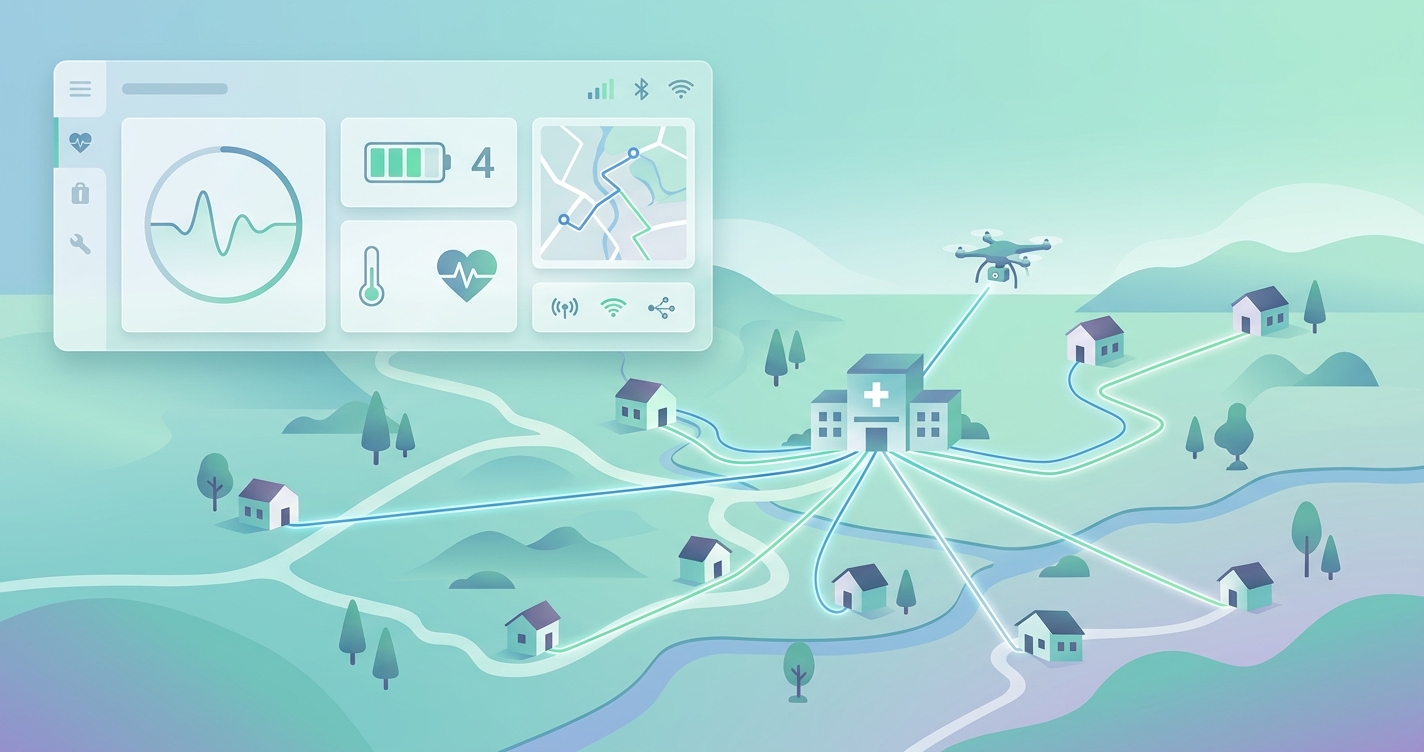
The Program of All-Inclusive Care for the Elderly (PACE) operates under immense pressure. Designed to provide comprehensive, integrated medical and social services to nursing-home-eligible older adults, the model thrives on keeping participants safely in their own communities. However, as patient acuity rises and clinical labor shortages squeeze operations, administrators are forced to reevaluate their service delivery methods. To maintain clinical outcomes and protect operating margins, organizations are rapidly adopting PACE program health tech. By deploying continuous, contactless monitoring systems, operators can observe physiological trends remotely without requiring active input from the senior, fundamentally changing how care is managed and prioritized.
"Passive remote monitoring technologies provide a critical infrastructure for home care clients, significantly reducing the risk of vulnerable individuals requiring higher levels of care by enabling proactive, data-informed interventions." " Lorie Donelle and Bradley Hiebert, JMIR Aging, 2025
The operational demand for PACE program health tech
The traditional PACE model relies heavily on physical interactions. Transportation to day centers, scheduled home visits, and manual vital sign checks form the core of the daily care plan. While this hands-on approach is effective, it is highly resource-intensive. When a home health nurse spends an hour driving to and from a participant's residence simply to confirm stable vital signs, the organization loses valuable clinical capacity.
Furthermore, PACE organizations operate under a capitated financial model. They receive a fixed monthly payment from Medicare and Medicaid to cover all of a participant's care needs. If a participant requires an expensive emergency room visit or an extended hospital stay, the PACE program bears that financial burden. Therefore, identifying health deteriorations early is not just a clinical goal; it is a financial necessity for the survival of the program.
Introducing advanced PACE program health tech eliminates many of these logistical and financial bottlenecks. Passive monitoring tools capture heart rate and respiratory data while the participant sleeps. This continuous stream of objective physiological data allows the Interdisciplinary Team (IDT) to assess stability remotely, triggering interventions only when the data indicates a genuine need.
| Operational Metric | Traditional PACE Care | Tech-Enabled PACE Care |
|---|---|---|
| Routine Home Visits | High frequency, driven by scheduled physical checks | Reduced frequency, optimized by objective health data |
| Care Coordination | Reactive to participant complaints or scheduled reviews | Proactive, driven by continuous physiological baselines |
| Staff Allocation | Distributed evenly across stable and high-risk patients | Concentrated on participants showing abnormal vital sign trends |
| Issue Detection | Delayed until next physical visit or emergency event | Immediate flagging of subtle changes in resting vitals |
| Census Scaling | Limited by the size of the mobile nursing staff | Accelerated by monitoring more participants with existing staff |
By transitioning from reactive scheduling to proactive data management, administrators and clinical directors report five core operational improvements to their delivery models:
- Reducing unnecessary home visits: Continuous observation of resting vital signs confirms a participant's stability overnight. Clinicians can replace routine, physical check-ins with remote data reviews, saving hours of transit time and redirecting resources to complex cases.
- Streamlining interdisciplinary care coordination: Objective physiological data flows directly into centralized organizational dashboards. This gives the entire Interdisciplinary Team a factual baseline during morning meetings, eliminating guesswork regarding a participant's status over the weekend.
- Allowing staff to focus on the highest-need participants: Instead of spending time on individuals who are physiologically stable, clinical staff can direct their limited hours to participants whose vital sign trends indicate a developing infection, respiratory issue, or chronic disease exacerbation.
- Mitigating clinical staffing constraints: Contactless technology functions as a force multiplier for the clinical team. It enables existing nursing professionals to manage larger participant panels safely without risking burnout or missing early warning signs of illness.
- Scaling PACE services predictably: With routine monitoring automated and centralized, organizations can increase their daily census and expand into new geographic service areas without needing a proportionally linear increase in their mobile workforce.
Industry applications in senior care
Integrating data into interdisciplinary teams
The defining feature of the PACE model is the Interdisciplinary Team, a group of professionals who meet daily to review participant health and adjust care plans. Historically, these meetings relied on anecdotal reports from transportation drivers, family caregivers, or day center staff. Modern systems replace subjective observations with objective metrics. If a participant's resting respiratory rate elevates consistently over three consecutive nights, the IDT can immediately schedule a targeted medical intervention, such as prescribing an antibiotic or ordering a mobile chest X-ray, before an emergency department transfer becomes necessary.
Replacing wearables with ambient sensors
A major hurdle in senior care technology has always been user compliance. Older adults, particularly those experiencing cognitive impairments or dementia, often forget to wear smartwatches, charge devices, or press emergency pendants. Passive systems eliminate this friction entirely. By utilizing camera-based or radar-based ambient sensors that require zero action from the user, organizations ensure a continuous data feed. The participant simply goes to sleep, and the technology performs the necessary health checks seamlessly.
Preventing emergency department transfers
Because PACE programs are financially responsible for all care, avoiding hospitalizations is critical. When seniors experience a urinary tract infection or an upper respiratory infection, their resting heart rate and respiratory rate often elevate days before they display outward symptoms like a fever or acute confusion. In a traditional monitoring model, the IDT might not realize the senior is sick until they collapse at home or arrive at the day center highly symptomatic. Passive vital sign monitoring flags the elevated baseline immediately, allowing the PACE physician to intervene early and keep the patient safely at home.
Current research and evidence
The shift toward technology-enabled care is backed by substantial and growing data. A 2025 multiprovincial randomized controlled trial published in JMIR Aging by Donelle, Hiebert, and colleagues evaluated the impact of passive remote monitoring on home care clients. The research indicated that such technologies were associated with a 30 percent reduction in the risk of participants requiring admission to higher levels of care in specific regions. This data strongly supports the deployment of passive systems to help older adults age in place safely.
Additionally, data from the Department of Health and Human Services indicates that the PACE model inherently reduces hospitalizations by approximately 24 percent compared to traditional Medicaid nursing home care. When operators layer remote patient monitoring on top of this highly effective integrated care model, the outcomes improve further. Industry billing reports show that in 2024, the primary CPT code used for the supply of remote monitoring devices was billed over two million times in the United States, representing nearly 20 percent growth from the previous year. This massive uptake confirms a sector-wide consensus that continuous physiological tracking reduces hospital readmissions and optimizes clinical workflows.
The future of PACE operations
As the aging population grows and the desire to age in place becomes the overwhelming preference for older adults, the demand for comprehensive community-based care will quickly outpace the availability of trained geriatric clinicians. The future of the PACE model relies entirely on creating efficiencies through technology. Programs that fail to adopt remote monitoring will find themselves restricted by their labor capacity, unable to enroll new participants or expand their service areas.
Future iterations of passive monitoring will likely incorporate deeper predictive analytics. Health tracking systems will Flag abnormal vital signs. Will cross-reference these anomalies with historical health records and medication changes to predict specific outcomes, such as congestive heart failure exacerbations. This evolution will transform the PACE model from a highly responsive care network into a fully predictive health management system, ensuring older adults remain safely in their homes for as long as possible while maximizing the operational efficiency of the provider.
Frequently asked questions
What is PACE program health tech? It refers to digital tools, remote patient monitoring systems, and passive sensors used by PACE organizations to track participant health data, coordinate care, and manage chronic conditions without relying solely on physical appointments or manual check-ins.
How does passive monitoring reduce unnecessary home visits? By providing continuous data on resting heart rates and respiratory patterns, passive monitoring confirms a participant's stability remotely. This allows clinical teams to replace routine check-ins with data reviews, reserving physical visits and transit time for individuals showing actual physiological decline.
Can PACE programs benefit financially from remote patient monitoring? Yes. Because PACE programs operate under a capitated payment model, any reduction in hospitalizations, emergency room visits, or high-cost interventions directly improves the organization's operating margins. Remote monitoring detects issues early, preventing costly medical escalations.
Why is care coordination easier with passive technology? Passive technology requires no action from the senior, eliminating user compliance issues entirely. This ensures the Interdisciplinary Team always has a continuous, objective baseline of physiological data to guide their daily care decisions, rather than relying on subjective observation.
For organizations looking to optimize their care models, Circadify is developing solutions to address this space. Learn more about how modern infrastructure supports the transition to efficient, home-based models by exploring our Hospital at Home solutions.