Aging in Place Technology: How It Reduces Operator Liability
Discover how continuous health records from passive monitoring systems can help senior living operators mitigate legal risk and improve standard of care.
For senior living operators, the operational margin for error has never been thinner. As resident acuity rises and family expectations mirror hospital level care standards, the financial and legal pressure on care facilities continues to intensify. When an adverse event occurs, the gap between what actually happened and what can be definitively documented often becomes the most vulnerable point for an operator. Traditional incident reporting relies heavily on retrospective staff observation, leaving a wide margin for ambiguity, inconsistent charting, and subjective disputes between families and facilities. In this high stakes environment, utilizing advanced aging in place technology is rapidly becoming a fundamental requirement for mitigating legal risk, ensuring objective documentation, and demonstrating an unimpeachable standard of care.
"Resident falls remain the most significant driver of losses for senior living operators, accounting for 30% of total financial losses between 2013 and 2022."
- WTW, Senior Living Claims Benchmarking Study 2025
Mitigating legal risk with aging in place technology
When families transition a loved one to assisted living or enroll them in a Program of All-Inclusive Care for the Elderly (PACE), they expect comprehensive, continuous oversight. However, facilities face inherent limitations in staffing and physical presence. Nurses and aides cannot be in every room at all times. This physical gap is exactly where aging in place technology transitions from a simple resident amenity to a critical risk management and liability defense tool.
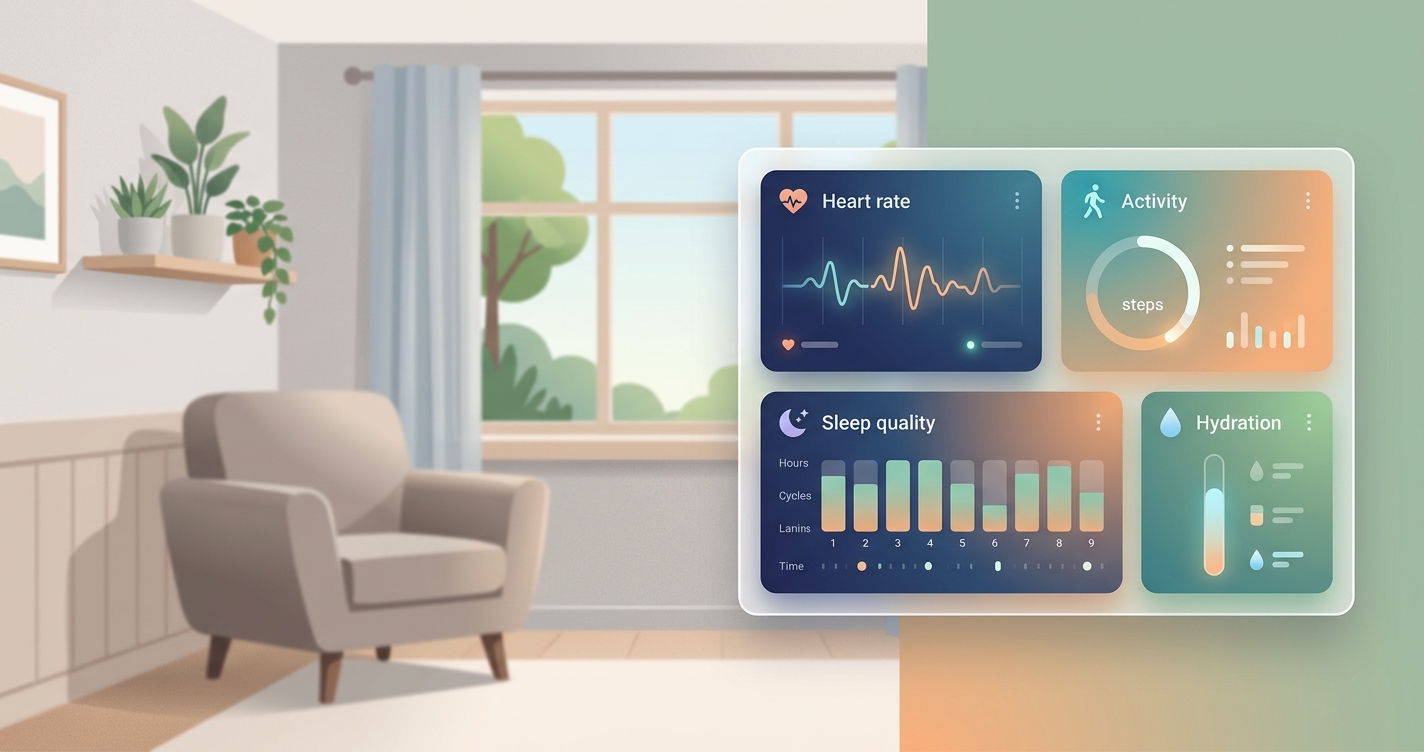
By continuously generating objective health data without requiring manual staff initiation or active resident compliance, passive monitoring systems create an unbroken chain of documentation. These systems operate quietly in the background, utilizing contactless sensors and advanced analytics to track resting heart rates, respiratory patterns, and gross motor movements.
If an adverse event such as an unwitnessed fall, a sudden respiratory decline, or an elopement attempt occurs, operators using continuous monitoring can point to a concrete, timestamped record of the resident's baseline health and the facility's immediate response timeline. This level of defensive documentation is essential in the face of litigation. Plaintiffs attorneys frequently target missing, incomplete, or delayed paper logs as primary evidence of corporate negligence. By replacing subjective manual checks with automated, continuous data, operators effectively close the documentation gaps that lead to costly settlements.
The problem with the paper trail
Historically, standard incident reporting has been entirely reactive. A resident experiences a health crisis, a staff member discovers the situation during a scheduled round, and an incident report is generated after the fact. This retrospective approach creates immediate liability. If a resident is found on the floor at 6:00 AM, families and legal teams will inevitably ask how long they were there, why the preceding warning signs were missed, and whether the facility was adequately staffed to monitor the population. Aging in place technology eliminates this ambiguity by providing the exact time of the event and the physiological context leading up to it.
| Feature | Traditional Incident Reporting | Passive Continuous Monitoring |
|---|---|---|
| Data Collection | Retrospective, manual entry by staff | Real-time, automated data capture |
| Subjectivity | High reliance on individual staff observation | Objective physiological and behavioral data |
| Documentation Gap | Highly vulnerable between scheduled rounds | Continuous, uninterrupted baseline |
| Liability Defense | Vulnerable to claims of falsified or missed logs | Verifiable, timestamped digital record |
| Preventative Insight | None; entirely reactive to crisis events | Identifies gradual declines before crises occur |
Implementing a robust remote monitoring infrastructure provides multiple layers of protection for operators:
- Establishes a clear, objective timeline of a resident's physical state leading up to any incident.
- Eliminates the ambiguity of manual charting gaps during overnight shifts or high stress periods.
- Provides concrete evidence of staff responsiveness and appropriate escalation of care based on real-time alerts.
- Reduces dependence on resident self-reporting, which is notoriously unreliable in memory care and cognitively impaired populations.
- Protects staff members from false accusations of neglect by validating their round times and response protocols.
Industry applications for risk management
Memory care units
In memory care environments, residents are frequently unable to accurately communicate physical distress or recall the details of an incident. This creates an exceptionally high liability environment for operators. A resident might sustain a bruise or experience a sudden shift in behavior due to a silent infection, but they cannot explain the cause to their caregivers. Passive monitoring removes the reliance on resident communication by tracking physiological markers directly. If a family questions the circumstances of a sudden hospitalization, the operator can present a clear data log showing the resident's resting heart rate, respiration, and nighttime movement patterns leading up to the event, proving conclusively that the standard of care was met and appropriate action was taken as soon as physiological anomalies appeared.
Home health and PACE programs
For home health agencies and PACE programs, liability extends directly into the unmonitored home environment. Operators face distinct risks when patients experience adverse events in the days between scheduled nursing visits. Aging in place technology bridges this liability gap by providing continuous oversight without placing a physical nurse in the home around the clock. When a sudden health decline is detected remotely, agencies can justify immediate emergency interventions. Conversely, they can demonstrate that a sudden, unpredictable event occurred despite comprehensive monitoring, protecting the agency from claims of abandonment or inadequate supervision.
Independent and assisted living
In independent and assisted living, the primary liability risk often stems from unwitnessed falls and the delayed discovery of residents in distress. Continuous health records help facilities identify the subtle precursors to falls, such as increased nighttime restlessness, frequent bathroom trips, or erratic sleep patterns. By identifying these trends early, operators can implement and document preventative interventions before an injury occurs. This proactive approach shifts the legal narrative from "the facility failed to respond quickly enough to a fall" to "the facility actively monitored risk factors and adjusted the care plan accordingly."
Current research and evidence
The financial and legal implications of inadequate monitoring are well documented across the senior care sector. According to the "2024 General and Professional Liability Benchmark Report" published by Marsh and Oliver Wyman, authored by industry experts Patrick O'Rourke and Tara Clayton, the senior care sector faces projected increases in liability costs across the board. The report forecasts a 0.6% increase in claim frequency, a 3.8% increase in claim severity, and a 4.4% increase in overall loss rates. As litigation costs compound and jury verdicts increase, operators are aggressively turning to technology for operational relief and legal protection.
Furthermore, research demonstrates that continuous monitoring directly impacts the most common sources of these liability claims. A 2012 comparative study by Pankaj A. Patel and Candace Gunnarsson, published in the journal Physical & Occupational Therapy in Geriatrics, evaluated the impact of a passive monitoring system in assisted living facilities over a 12 month period. The study tracked outcomes between a facility utilizing automated sensor technology and a facility relying solely on traditional care models. The facility utilizing passive monitoring saw significantly lower average weekly falls and trended toward fewer hospitalizations. By reducing the frequency of the exact events that trigger lawsuits, operators simultaneously improve resident outcomes and protect their bottom line.
The future of aging in place technology
As the senior care industry consolidates and insurance premiums for long-term care facilities escalate, the adoption of continuous monitoring will rapidly shift from a competitive advantage to a strict underwriting requirement. Future liability frameworks will likely judge operators not just on how they respond to an incident, but on whether they utilized available technology to predict and prevent it.
We are moving toward a legal and operational standard where a lack of objective, continuous data will be viewed as an inherent operational deficiency. In the near future, aging in place technology will integrate directly with electronic health records and liability insurance platforms, automatically logging compliance with care plans and triggering proactive interventions. Insurance providers are already beginning to offer premium discounts to facilities that deploy verifiable passive monitoring systems, recognizing that objective data is the strongest defense against spurious claims.
Operators who adopt these systems today are not just upgrading their care models; they are future-proofing their organizations against a legal environment that increasingly demands absolute transparency.
Frequently asked questions
How does passive monitoring differ from traditional call buttons for liability protection?
Traditional call buttons require the resident to be conscious, physically able to reach the device, and cognitively aware enough to request help. If a resident fails to press the button during an emergency, operators can still face negligence claims for delayed response times. Passive monitoring requires no action from the senior, continuously tracking physiological signs and automatically alerting staff to anomalies. This automated data stream provides a much stronger defense against liability by removing the burden of action from the resident.
Can remote monitoring data be used effectively in legal defense?
Yes. Objective, timestamped data from continuous monitoring systems provides a factual, minute by minute timeline of a resident's condition and the facility's response. This verifiable digital record is highly effective in refuting subjective claims and demonstrating that the facility provided an appropriate standard of care based on the available physiological data.
Will implementing this technology increase my facility's insurance premiums?
Conversely, many liability insurance providers are beginning to recognize the immense risk mitigation value of robust monitoring systems. By demonstrably reducing the frequency of falls and adverse events, and by providing concrete documentation that defends against frivolous lawsuits, operators can often negotiate more favorable insurance terms and reduce their overall liability exposure.
Does passive monitoring violate resident privacy regulations?
Modern passive systems utilize advanced contactless sensors that do not record or transmit identifiable video feeds or audio recordings. By extracting vital signs purely through movement or infrared data, these systems monitor health without intruding on dignity or privacy. Facilities must implement proper consent protocols and transparent communication with families, but these systems are widely recognized as far less invasive than continuous physical room checks while offering superior liability protection.
For operators looking to modernize their risk management strategy and provide a verifiable standard of care, non-intrusive daily health checks are the clearest path forward. Circadify is actively addressing this space, offering seamless, contactless vital sign monitoring that requires no wearables, no buttons, just a camera based system designed for dignity and accuracy. To learn how automated health records can protect your facility and improve resident outcomes, explore our Senior care program today.