Best Senior Monitoring Systems for Family Caregivers in 2026
A 2026 buyer's guide to the best senior monitoring system options for family caregivers, comparing wearables, sensors, alert buttons, and contactless cameras.
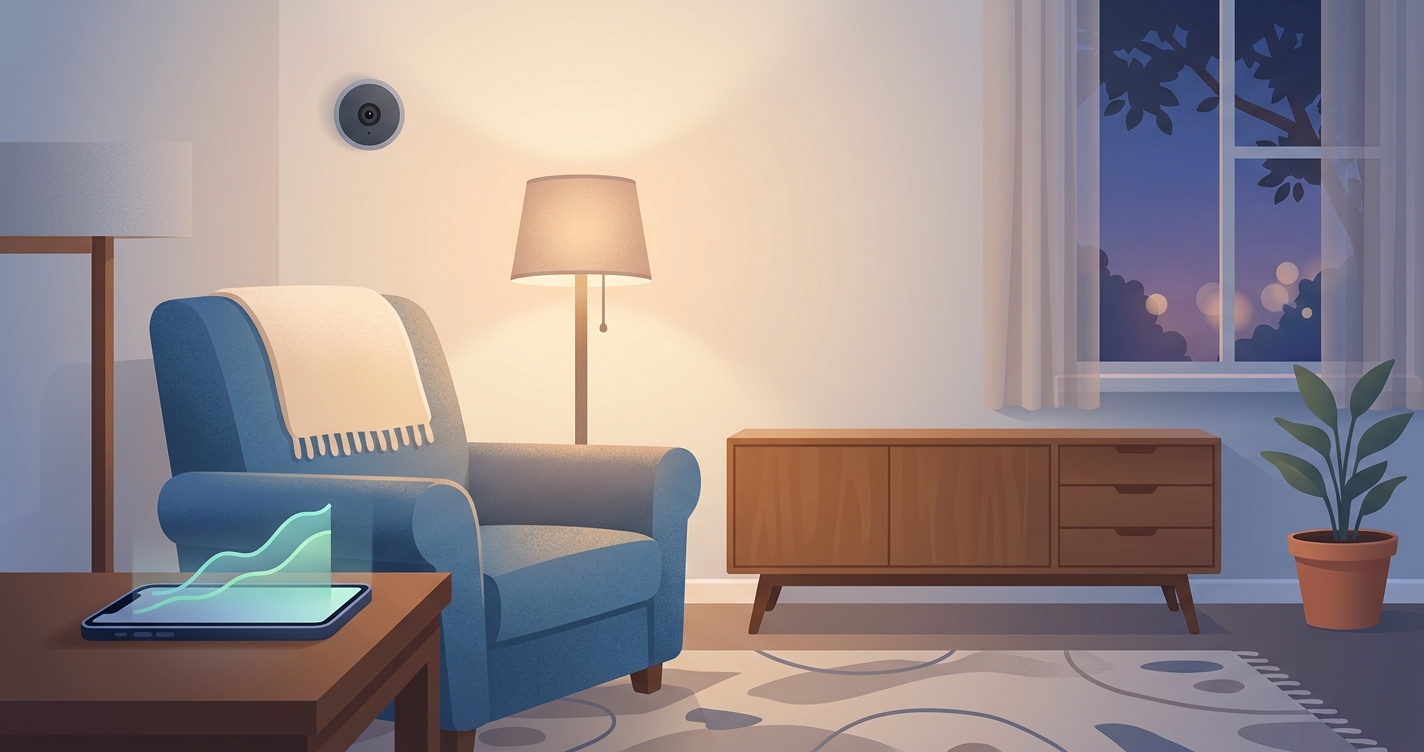
Choosing the best senior monitoring system has become a defining purchase for the millions of adult children now managing a parent's care from another room, another city, or another time zone. The category has matured well beyond the pendant alarm. In 2026, families are weighing camera-based contactless systems against wrist wearables, bed and motion sensors, and traditional alert buttons, and the right answer depends less on the brochure and more on whether an aging parent will actually use the thing every day. This guide breaks down how the leading approaches compare, what the evidence says, and which trade-offs matter most when you are the one being paged at 2 a.m.
The global remote patient monitoring market was valued at roughly $22 billion in 2024 and is projected to reach $34.4 billion in 2025, with more than 71 million Americans expected to use some form of remote monitoring by 2025, according to IMARC Group and IntuitionLabs market analyses.
How to evaluate the best senior monitoring system
A monitoring system is only as good as its weakest day. The best senior monitoring system for one family fails another because the underlying needs differ: a parent with early cognitive decline cannot reliably charge a device, while a fall-prone parent may refuse to wear anything that signals frailty. Before comparing products, caregivers should score each option against five practical dimensions.
- Adherence: Will the senior consistently wear, charge, or interact with it without daily reminders?
- Coverage: Does it capture meaningful health signals, or only emergencies after they happen?
- Privacy: How much of the home does it record or expose, and who sees the data?
- Caregiver workload: Does it reduce check-in calls or add a new dashboard to babysit?
- Cost and contracts: Upfront hardware, monthly fees, and whether reimbursement applies.
The recurring failure point across senior care monitoring reviews is adherence. A device sitting in a drawer protects no one. This is why the market has shifted toward passive and contactless approaches that work whether or not the senior remembers they exist.
Comparing the top remote monitoring for seniors
The table below compares the five dominant categories families shop in 2026. These are device classes, not brands, so you can map any specific product onto the right row.
| System type | What it tracks | Senior effort required | Privacy profile | Best fit |
|---|---|---|---|---|
| Contactless camera (rPPG) | Heart rate, breathing, sleep, movement, daily trends | None, fully passive | Moderate; processes video, no wearables | Aging parents who reject gadgets |
| Medical alert button / PERS | Manual SOS, some auto fall detection | Must wear and press | High; no continuous data | Fall risk, mentally sharp seniors |
| Wrist wearables | Heart rate, steps, SpO2, some falls | Daily charging and wearing | Moderate; body-worn data | Tech-comfortable, active seniors |
| Ambient motion / bed sensors | Activity patterns, bed exits, room presence | None, passive | High; no imaging | Routine and wandering detection |
| Video check-in cameras | Live or recorded visual look-in | None for senior | Lower; continuous video feed | Visual reassurance, not health data |
A few patterns stand out. Alert buttons remain the cheapest entry point but only act after a crisis and depend entirely on the senior pressing them. Wearables capture the richest active-lifestyle data yet stumble on charging and comfort for the oldest and frailest users. Contactless camera systems and ambient sensors require nothing from the senior, which is why they increasingly anchor the best elderly monitoring devices lists aimed at reluctant or cognitively impaired parents.
Industry applications across care settings
The same monitoring categories serve very different buyers, and understanding how professionals deploy them helps families calibrate expectations.
Family caregivers at home
For adult children, the goal is usually early warning plus reassurance. A passive system that surfaces a gradual rise in nighttime restlessness or a drift in resting heart rate gives families a reason to call before a fall or an infection escalates. The best senior monitoring system here is the one a parent forgets is running, because adherence in an unsupervised home is the entire ballgame.
Home health agencies and PACE programs
Agencies and Programs of All-Inclusive Care for the Elderly use monitoring to extend clinical eyes between visits. Daily vital sign trends help nurses triage who needs an in-person check, supporting documentation and reducing avoidable emergency transfers. Medicare claim volumes for remote monitoring codes rose more than 3,000 percent over four years, per IntuitionLabs, reflecting how routine this has become in professional care.
Senior living and memory care operators
Communities deploy passive monitoring to demonstrate quality, protect residents who cannot self-report, and justify technology spend to ownership groups. In memory care especially, systems that demand no resident cooperation are the only ones that work consistently.
Current research and evidence
The scientific case for contactless monitoring has strengthened considerably. A 2024 study by Caroppo and colleagues, published through the National Research Council of Italy, introduced a camera-based photoplethysmography pipeline that estimates heart rate, breathing rate, and SpO2 from facial video in adults over 65. The researchers specifically engineered the system to handle aging-related factors such as skin tone, wrinkles, folds, and moles, and validated it on a dataset of people over 65, addressing a long-standing gap where algorithms trained on younger faces underperformed on seniors.
Sleep is another active frontier. A digital health technology evaluation published in JMIR mHealth and uHealth reported that contactless monitoring achieved acceptable accuracy for heart rate, breathing rate, and breathing disturbance during sleep in aging populations. A systematic review in MDPI Sensors on non-contact vision-based vital sign monitoring catalogued how remote photoplethysmography can run on commercial, low-cost cameras, lowering the hardware barrier that once kept this technology in hospitals.
Two caveats matter for buyers reading senior care monitoring reviews. First, contactless vital sign estimation is still maturing and accuracy varies with lighting, motion, and distance. Second, no consumer monitoring system substitutes for medical diagnosis; these tools flag trends and prompt human follow-up rather than deliver clinical readings. The strongest evidence supports monitoring as an early-warning layer, not a replacement for clinicians.
The future of senior monitoring systems
Three shifts will shape the next few years. First, convergence: rather than choosing one device, families will buy layered systems that pair passive ambient sensing with contactless vitals and keep a manual SOS as backup. Second, the locus of intelligence is moving from raw data to interpretation. The advances in AI and deep learning noted across 2024 contactless monitoring reviews are pushing products toward flagging meaningful change automatically instead of dumping numbers on a caregiver. Third, reimbursement and aging-in-place economics will keep pulling spending toward systems that reduce hospitalizations, since roughly 77 percent of older adults want to remain in their homes, per AARP survey data cited widely in 2024 aging-in-place reporting.
The clearest trajectory is away from devices that demand senior cooperation and toward those that work invisibly. For the oldest, frailest, and most resistant users, the winning systems in 2026 and beyond are the ones that ask nothing of the person being protected.
Frequently asked questions
What is the best senior monitoring system for a parent who refuses to wear anything?
Passive options win here. Contactless camera-based systems and ambient motion or bed sensors require no wearing, charging, or button-pressing, which makes them the most reliable choice for parents who reject wearables or have cognitive decline. The best senior monitoring system in these cases is whichever one runs without the senior's daily participation.
Are contactless monitoring systems accurate enough to trust?
Peer-reviewed research, including 2024 work from the National Research Council of Italy and evaluations in JMIR mHealth and uHealth, shows acceptable accuracy for heart rate and breathing rate in older adults under reasonable conditions. Accuracy still varies with lighting and movement, so treat these systems as early-warning trend trackers rather than diagnostic medical devices.
How much do remote monitoring systems for seniors cost?
Costs range widely. Basic alert buttons start around $20 to $40 per month, wearables add device purchase plus optional subscriptions, and contactless or sensor-based systems typically charge a monthly service fee on top of hardware. Some professional deployments through home health or PACE programs qualify for Medicare remote monitoring reimbursement, which has grown sharply since 2020.
Can family caregivers monitor an aging parent from another state?
Yes. Most remote monitoring for seniors is built for distance caregiving, sending trends and alerts to a smartphone app. Passive systems are especially suited to long-distance care because they generate continuous data without relying on the senior to report how they feel each day.
Circadify is building toward this passive, contactless future of senior care, delivering daily health checks through a simple camera without wearables or buttons. Family caregivers who want to see how contactless monitoring fits an aging parent's routine can start a contactless monitoring trial through Circadify's senior care program.