Daily Vitals Routine for Seniors: A Caregiver Guide
A research-backed guide for caregivers on establishing an effective daily vitals routine for seniors, including what to track, the best monitoring methods, and when to seek help.
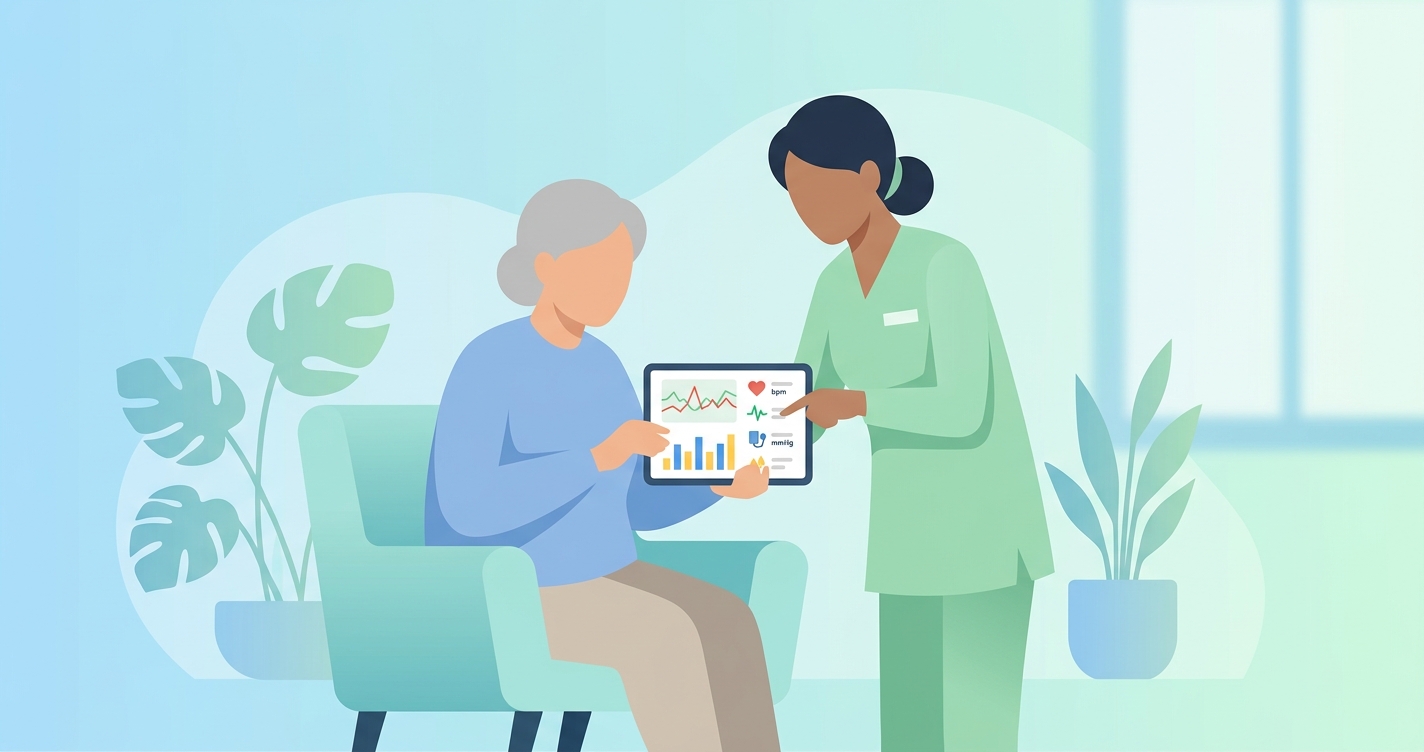
The landscape of senior care is undergoing a fundamental shift. As the population ages and the desire to "age in place" becomes the norm, the responsibility for monitoring health is increasingly falling to caregivers in home and community settings. A proactive approach to tracking daily vital signs is no longer a practice reserved for clinical environments. For family caregivers, home health aides, and staff at senior living communities, a consistent daily vitals routine is becoming an essential tool for early detection of health issues, management of chronic conditions, and prevention of hospitalizations. This senior daily vitals caregiver guide provides a research-backed framework for establishing an effective monitoring routine.
"Approximately 80% of older adults have at least one chronic disease, and 77% have at least two." - National Council on Aging, 2020.
The core components of a senior daily vitals caregiver guide
A comprehensive senior daily vitals caregiver guide should focus on the consistent and accurate measurement of key physiological parameters. Even subtle changes in these metrics can be leading indicators of a significant underlying health issue. The primary vital signs to monitor in seniors include:
- Blood Pressure: A critical indicator of cardiovascular health. High blood pressure (hypertension) is a major risk factor for heart disease and stroke, while low blood pressure can lead to dizziness and falls.
- Heart Rate: The number of times the heart beats per minute. A heart rate that is consistently too high or too low, or an irregular rhythm, can signal a variety of cardiac problems.
- Respiratory Rate: The number of breaths a person takes per minute. Changes in respiratory rate can be an early sign of respiratory infections like pneumonia, or the worsening of chronic conditions such as COPD.
- Body Temperature: A key indicator of infection or inflammation. A fever in an older adult can be a sign of a serious illness, even if it is only a slight increase.
- Oxygen Saturation (SpO2): The percentage of oxygen in the blood. Low oxygen levels can indicate a problem with the lungs or circulatory system and require prompt medical attention.
| Monitoring Method | Ease of Use | Data Accuracy | Intrusion Level | Best For |
|---|---|---|---|---|
| Manual Spot-Checks | Requires training and can be difficult for some caregivers to perform accurately. | Varies depending on the user's skill and the quality of the equipment. | High. Requires physical contact and cooperation from the senior, which can be disruptive. | Obtaining a baseline reading or for periodic checks by a trained professional. |
| Wearable Devices | Generally easy to use once set up. The senior must remember to wear and charge the device. | Accuracy can be affected by movement, skin contact, and device calibration. | Moderate. Some seniors may find wearables uncomfortable or stigmatizing. | Continuous monitoring of activity levels and heart rate, particularly for ambulatory seniors. |
| Contactless Monitoring | Effortless for the senior. The system works in the background without any action required. | High. Advanced systems use sophisticated sensors and algorithms to achieve clinical-grade accuracy. | Low. Preserves privacy and dignity by monitoring from a distance without physical contact. | Continuous, non-intrusive monitoring of multiple vital signs, especially for seniors with dementia or mobility issues. |
Industry Applications
The adoption of systematic vital sign monitoring is transforming care delivery across the senior care continuum.
Senior living communities
For assisted living and independent living operators, a daily vitals routine provides a safety net for residents. Non-intrusive monitoring can alert staff to a resident's declining health before it becomes a crisis, enabling earlier intervention and reducing the need for emergency room visits and hospitalizations. This proactive approach Improves resident outcomes. Provides peace of mind for families.
Home health agencies
In the home health setting, remote monitoring of vital signs allows agencies to extend their reach and provide a higher level of care. A 2022 study by researchers at the University of California, San Francisco, found that remote monitoring programs can lead to better management of chronic conditions and a reduction in hospital readmissions. By tracking vital signs daily, clinicians can make timely adjustments to a patient's care plan from a distance.
PACE Programs
Programs of All-Inclusive Care for the Elderly (PACE) are responsible for the total health of their participants. A daily vitals routine is an indispensable tool for these programs, as it provides the data needed to manage complex medical conditions in a community setting. Contactless monitoring is particularly valuable for PACE participants, many of whom have cognitive impairments that make traditional monitoring methods challenging.
Current research and evidence
The efficacy of remote vital sign monitoring for seniors is supported by a growing body of research. A 2022 scoping review in the International Journal of Environmental Research and Public Health analyzed 46 studies and concluded that remote monitoring systems have the potential to improve the quality of life and safety of older adults. The authors, from universities in Italy and Switzerland, noted the increasing use of non-invasive and contactless technologies.
Furthermore, a 2021 systematic review published in JMIR explored the value of remote monitoring for detecting clinical deterioration. Researchers from institutions in Australia and the UK found that continuous monitoring of vital signs could predict adverse events, although they called for more research into the most effective models.
The future of daily vitals monitoring
The future of senior vital signs monitoring lies in the integration of artificial intelligence with non-intrusive sensor technologies. AI-powered platforms will be able to analyze subtle trends in vital sign data over time, providing caregivers with predictive insights into a senior's health. This will enable a new level of proactive care, where potential health issues are identified and addressed before they become acute. The ultimate goal is to create a seamless and supportive environment where seniors can live safely and independently for as long as possible.
Frequently asked questions
What are the most important vital signs to monitor in seniors?
The most important vital signs to monitor in seniors are blood pressure, heart rate, respiratory rate, body temperature, and oxygen saturation. These five metrics provide a comprehensive overview of a senior's health and can help to detect a wide range of potential problems.
How often should I check a senior's vital signs?
The frequency of vital sign checks will depend on the senior's individual health status and care plan. For seniors with chronic conditions, daily monitoring is often recommended. In other cases, a few times a week may be sufficient. It is always best to consult with a healthcare professional to determine the appropriate monitoring schedule.
What is the best device for monitoring a senior's vitals?
The best device for monitoring a senior's vitals will depend on their specific needs and preferences. For seniors who are comfortable with technology and have a relatively active lifestyle, a wearable device may be a good option. For seniors with dementia or mobility issues, or for those who value privacy and comfort, a contactless monitoring system is often the best choice.
When should I be concerned about a senior's vital signs?
You should be concerned about a senior's vital signs if they are consistently outside of the normal range, or if you notice a sudden and significant change. It is also important to be aware of other symptoms that may accompany abnormal vital signs, such as dizziness, shortness of breath, or confusion. If you have any concerns, you should contact a healthcare professional immediately.
As the industry moves toward more intelligent and less intrusive monitoring solutions, Circadify is actively working in this space. Our technologies aim to provide caregivers with the insights they need to deliver proactive care. To learn more about how our solutions can support your Senior care program, visit circadify.com/solutions/hospital-at-home.