How can home health agencies get daily health updates without extra visits?
How remote and contactless monitoring gives home health agencies continuous, objective health data on patients without scheduling additional in-person visits.
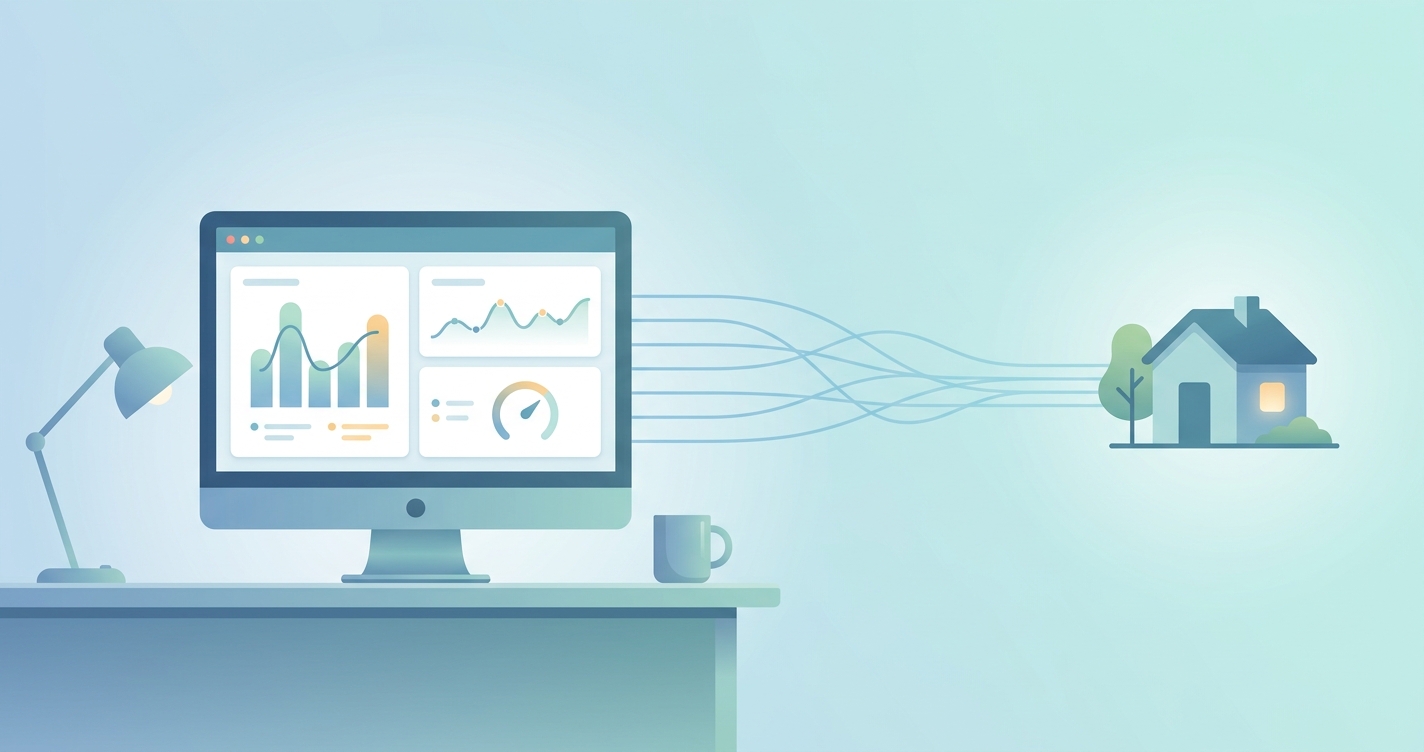
Home health is the fastest-growing segment of post-acute care in the United States, and it is also one of the most operationally constrained. Agencies are being asked to manage patients with higher acuity, more chronic conditions, and tighter discharge timelines, all while the clinical workforce shrinks. The visit-based model that has defined the industry for decades creates an uncomfortable blind spot: a nurse sees a patient on Monday, signs off on a stable assessment, and has no objective insight into what happens between then and the next scheduled visit. For administrators and care coordinators evaluating how to close that gap, home health agencies monitoring through remote and contactless tools has moved from a nice-to-have pilot to a core operational question.
"Home health care providers reported turning away more than 25% of referred patients in 2023 due to staffing shortages, a constraint that has pushed agencies toward technology that extends clinical reach without adding visits.", Home Care Association of America, 2023
What home health agencies monitoring actually solves
The central problem is not that nurses lack skill. It is that a scheduled visit is a snapshot, and snapshots miss the slow drift that precedes most avoidable hospitalizations. A patient with congestive heart failure can gain three pounds of fluid over four days, see resting heart rate climb, and report nothing alarming when asked how they feel. By the time the next visit lands on the calendar, the decompensation is well underway and the destination is the emergency department.
Remote monitoring changes the unit of observation from the visit to the day. Instead of inferring stability from a twice-weekly touchpoint, the care team receives continuous, objective data on vital sign trends. This does two things at once. It surfaces early warning signs while there is still time for a phone call or a medication adjustment, and it confirms stability for the majority of patients who are doing fine, allowing the agency to redeploy scarce nursing hours toward the patients who actually need a hands-on visit.
The clinical case for this shift is well documented. A widely cited Michigan Medicine program reported a 59% reduction in hospitalizations among high-risk patients enrolled in remote monitoring, and the University of Pittsburgh Medical Center has reported readmission risk reductions of up to 76% in monitored populations. The number of U.S. patients using remote monitoring tools was projected to approach 30 million by 2024, according to industry analyses, reflecting how quickly the model has scaled.
Why "without extra visits" is the operative phrase
The constraint that matters most to administrators is labor. Adding a daily in-person check is not financially or logistically possible across a panel of hundreds of patients. The value of remote monitoring is that the daily data arrives on its own. The clinician reviews a dashboard, triages by exception, and intervenes only where the data warrants it. The visit is preserved as the high-value resource it is, deployed deliberately rather than on a fixed calendar.
Comparing approaches to daily health data
Not all monitoring methods carry the same operational burden. The table below compares the common approaches home health agencies weigh when deciding how to collect daily data between visits.
| Approach | Daily data without a visit | Patient effort required | Adherence risk | Best fit |
|---|---|---|---|---|
| Additional in-person visits | No | None | None, but capacity-limited | Acute, hands-on clinical needs |
| Phone or video check-ins | Partial | Moderate, must answer and respond | Moderate, depends on engagement | Education, medication review |
| Wearable devices | Yes | High, must wear and charge | High, devices end up in a drawer | Tech-comfortable, motivated patients |
| Peripheral devices (cuffs, scales) | Yes | Moderate, must operate daily | Moderate to high | Single-condition chronic management |
| Contactless ambient monitoring | Yes | Minimal to none | Low, passive collection | Frail, cognitively impaired, or low-tech patients |
The pattern that emerges is straightforward: methods that demand patient effort tend to fail in exactly the population home health serves most, namely older adults with multiple conditions, limited dexterity, or cognitive decline. The lower the effort required, the more reliable the data stream over time.
Key considerations for administrators evaluating these options:
- Adherence is the hidden cost. A device that captures perfect data only when used produces gaps that erode clinical trust.
- Onboarding friction scales badly. Anything requiring a setup visit or daily patient action multiplies across a large panel.
- Data has to reach the clinician in a usable form. Raw numbers without trend context add noise, not insight.
- Documentation matters. CMS now requires agencies to track telehealth and remote monitoring use through G-codes (G0320, G0321, G0322), so the method chosen should generate clean records.
Industry applications across the home health workflow
Care plan optimization
Continuous data lets coordinators move from static, recertification-driven care plans to plans that respond to what the body is actually doing. When trend data shows a patient stabilizing, visit frequency can be safely tapered. When it shows drift, the plan escalates before a crisis. This is the operational core of value-based care, where outcomes and efficiency are rewarded over visit volume.
Triage and exception-based staffing
Rather than every patient receiving the same cadence, a monitoring dashboard lets a single nurse oversee a large panel and direct attention by exception. Given that agencies turned away a quarter of referrals in 2023 because of staffing, the ability to safely supervise more patients per clinician is not a luxury. It is a survival mechanism.
OASIS and quality reporting
The OASIS-E assessment set rewards agencies that can demonstrate functional and clinical stability with objective evidence. Daily monitoring data supplies a defensible record of patient status between assessment points, supporting both compliance and the quality scores that increasingly drive referral relationships and reimbursement.
Family and referral-source communication
Discharging hospitals and adult children both want assurance that a patient is being watched. Objective daily data gives the agency a concrete answer, which strengthens referral partnerships and reduces the volume of reassurance calls that consume coordinator time.
Current research and evidence
The evidence base for remote monitoring in home-based care has matured well beyond early enthusiasm. Beyond the Michigan Medicine and UPMC hospitalization figures, a 2023 narrative review published in PMC on remote patient monitoring implementation emphasized that the technology's value depends heavily on the care model wrapped around it. Data alone does not improve outcomes. The combination of reliable data, clear escalation protocols, and clinician time to act on alerts is what produces results.
Workforce research reinforces the urgency. The home care nursing workforce has declined since 2020 even as demand has risen, a mismatch documented in MedPAC's March 2023 report to Congress and in workforce analyses from the Home Care Association of America. Monitoring is increasingly framed not as a way to replace clinicians but as a way to make a smaller workforce safely cover a larger population.
Reimbursement remains the open variable. As of recent rule cycles, CMS does not separately reimburse remote patient monitoring for home health agencies under the bundled payment model, though the mandatory G-code tracking introduced in 2023 is widely read as the agency building the data foundation for future coverage decisions. Agencies adopting monitoring today are largely doing so for the operational and quality returns rather than direct payment.
The future of home health agencies monitoring
Three developments are likely to define the next phase. First, the shift away from device-dependent monitoring toward passive, ambient methods that require nothing of the patient, which addresses the adherence problem that has limited the frail and cognitively impaired populations home health serves most. Second, the integration of monitoring data directly into electronic health records and OASIS workflows, so that clinicians review one consolidated view rather than logging into separate platforms. Third, the gradual evolution of reimbursement as CMS analyzes the G-code data it now requires, which could change the financial calculus considerably.
The direction of travel is clear. The visit will not disappear, but it will stop being the only window into a patient's condition. Agencies that build a continuous data layer underneath their visit schedule will be positioned to manage higher acuity with fewer clinicians, which is precisely the pressure the industry faces.
Frequently asked questions
Can home health agencies really get daily data without scheduling more visits? Yes. Remote and contactless monitoring tools collect vital sign and activity data automatically between visits, delivering it to a dashboard the clinical team reviews remotely. The visit schedule stays the same or is reduced; the daily data arrives without an additional in-person touchpoint.
Does remote monitoring replace home health nurses? No. It extends their reach. Monitoring handles passive observation and surfaces patients who need attention, while nurses focus their hands-on time on the patients the data flags. For agencies turning away referrals due to staffing, this lets a smaller team safely supervise a larger panel.
Will Medicare reimburse home health agencies for remote monitoring? Not separately under the current bundled home health payment model. However, CMS began requiring agencies to track remote monitoring use through G-codes in 2023, which many observers interpret as groundwork for potential future coverage. Most agencies adopt monitoring today for operational and quality benefits.
What kind of monitoring works best for frail or cognitively impaired patients? Passive, contactless approaches that require no patient action tend to outperform wearables and peripheral devices in this population, because there is nothing to charge, wear, or operate. Adherence is the main failure point for device-based methods, and ambient monitoring removes that variable.
For agencies weighing how to add a continuous data layer without adding to an already strained schedule, Circadify is addressing this space with non-intrusive daily health checks built for older adults, no wearables or buttons required. Learn more about the senior care program approach to hospital-at-home monitoring.