How Family Caregivers Use Contactless Monitoring to Coordinate With Home Health Nurses
Learn how family caregivers and home health nurses use contactless monitoring to bridge communication gaps, share objective data, and improve senior care outcomes.
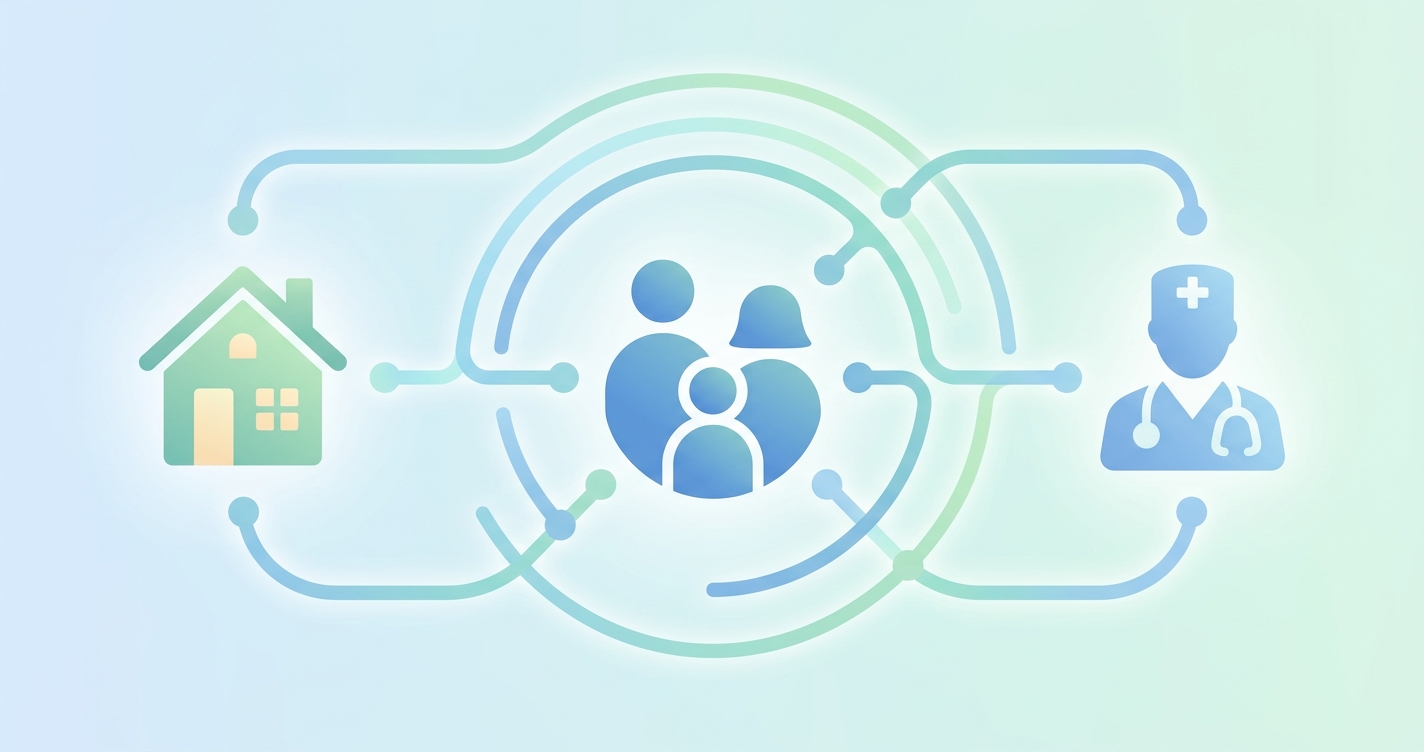
The coordination of senior care at home has evolved into a complex logistical challenge, often managed by a family caregiver who acts as the central hub for a rotating cast of professionals, most notably home health nurses. While both parties share the same goal, the well-being of the senior, the communication and data-sharing between them are frequently fragmented, relying on asynchronous updates and subjective observations. This gap can lead to missed opportunities for early intervention and place significant stress on the entire care team. The integration of technology to create a shared, objective understanding of a senior's health status is fundamentally reshaping this dynamic.
"An estimated 38 million family caregivers in the United States provide care to an adult with a disability or illness. The economic value of this unpaid care was estimated at $600 billion in 2021, according to AARP's 'Valuing the Invaluable' report series."
The coordination disconnect in home-based care
The traditional model of collaboration between family caregivers and visiting nurses is fraught with structural inefficiencies. Home health nurses operate on demanding schedules, with limited time at each residence for both clinical tasks and comprehensive communication. Family caregivers, who may be juggling their own careers and responsibilities, are often not present during these visits. The result is a system reliant on handwritten notes left on a kitchen counter, games of phone tag, and second-hand reports. This method is Inefficient. Prone to error and misinterpretation. A caregiver's note that "Mom seemed more tired today" is subjective and lacks the clinical context a nurse needs. Conversely, a nurse's clinical note might not be seen by the family for hours or even days.
This is where the need to family caregivers contactless monitoring coordinate home health becomes critical. Without a shared, objective data source, both parties are working with incomplete information. The family sees the senior's day-to-day fluctuations, while the nurse gets a brief snapshot during a visit. This disconnect means that subtle but significant trends in vital signs, sleep quality, or mobility can be easily missed until they escalate into a more serious event, such as a fall or a hospital admission. The core challenge is the absence of a single source of truth that both the clinical professional and the dedicated family member can access and trust.
| Feature | Traditional Coordination Methods | Contactless Monitoring Platform |
|---|---|---|
| Data Source | Manual notes, verbal reports, subjective recall | Automated, objective vital signs, sleep, and activity data |
| Accessibility | Dependent on physical presence or synchronous calls | 24/7 remote access via a secure dashboard for all approved parties |
| Timeliness of Information | Delayed, often by hours or days | Real-time alerts and daily trend summaries |
| Data Objectivity | Subjective ("seemed weak," "slept poorly") | Objective measurements (e.g., respiratory rate, sleep duration in hours) |
| Communication Trail | Fragmented, difficult to track history | Centralized, logged communication and data history in one place |
| Proactive Potential | Reactive to observed problems | Proactive, based on data-driven alerts and trend analysis |
Industry applications and benefits
The shift toward a data-driven, collaborative model has profound implications for the entire ecosystem of senior care. By providing a common operational picture, contactless monitoring transforms the relationship between caregivers and clinicians from a series of handoffs into a continuous, informed partnership.
For home health agencies
Agencies that equip their nurses with access to contactless monitoring data can operate with far greater efficiency and clinical precision. A nurse can review a patient's vital sign trends before a visit, allowing them to walk in with a clear understanding of the patient's status over the past 24-48 hours. This allows them to focus visit time on targeted assessments and interventions. Furthermore, data trends can help agencies better triage patient needs, allocating resources to those most at risk and potentially reducing unnecessary visits. This data also provides objective evidence of patient outcomes, strengthening their value proposition to health systems and payers.
For family caregivers
For family caregivers, the primary benefits are peace of mind and empowerment. The anxiety of not knowing what is happening when they are not there is replaced by the ability to check a dashboard for objective updates. This alleviates the pressure to be constantly present and reduces caregiver burnout. When they do speak with the home health nurse, the conversation is more productive. Instead of "How is he doing?", the question becomes, "I saw his respiratory rate was slightly elevated last night; what are your thoughts on that trend?" This higher level of discourse leads to better care and a stronger sense of partnership with the clinical team.
For seniors and health systems
The ultimate beneficiary is the senior, who receives more proactive and less intrusive care. The coordinated team around them is better equipped to catch negative trends early, preventing ER visits and hospitalizations. Research from institutions like the University of Pittsburgh has consistently shown that remote patient monitoring can lead to better management of chronic conditions. For the broader health system, this model supports the strategic goal of moving care into the home, reducing the strain on acute care facilities and lowering overall healthcare costs.
Current research and evidence
The academic and clinical communities are increasingly validating the role of technology in bridging communication gaps in home care. A study published in the Journal of the American Geriatrics Society by researchers including David Bass, PhD, of the Benjamin Rose Institute on Aging, has explored the complexities of care coordination. Their work highlights that breakdowns in communication are a major source of caregiver burden and can negatively impact patient outcomes.
Furthermore, research from the National Institutes of Health (NIH) has pointed to the effectiveness of remote monitoring technologies in managing chronic diseases, which are prevalent among home health patients. A 2021 study emphasized that consistent monitoring allows for timely interventions that can prevent acute exacerbations. The key finding across much of this research is that technology is most effective when it is "passive" or "contactless," meaning it requires no action from the senior. This circumvents the common problem of non-compliance with wearable devices, which studies have shown can be a significant barrier for older adults, particularly those with cognitive decline. By providing an automated, continuous data stream, contactless systems ensure the care team always has reliable information.
The future of coordinated home care
The trajectory for this technology is pointed toward deeper integration and greater intelligence. In the coming years, expect to see contactless monitoring platforms become more tightly integrated with home health agency Electronic Health Records (EHRs). This will eliminate the need for manual data entry and create a seamless flow of information from the senior's home directly into their official medical record. Additionally, the application of machine learning to these large datasets will enable predictive analytics. Systems will be able to identify patients at high risk for falls, infections, or hospitalizations based on subtle changes in their data, allowing the care team to intervene preemptively. This evolution marks a shift from reactive care to a truly proactive and preventative model, fully realizing the potential of aging in place safely.
Frequently asked questions
Q: Does contactless monitoring replace the need for a home health nurse? A: Absolutely not. Contactless monitoring is a tool to enhance the effectiveness and efficiency of a skilled home health nurse. It provides them with objective data to inform their clinical judgment, prioritize tasks, and have more meaningful conversations with family caregivers, but it does not replace their critical hands-on care and clinical expertise.
Q: Is this technology difficult for seniors to use? A: The primary advantage of modern contactless monitoring systems is that they require no action from the senior. There are no wearables to charge, no buttons to push, and no new routines to learn. The technology works ambiently in the background, promoting independence while ensuring safety.
Q: How is everyone's privacy protected? A: Data privacy and security are critical. These platforms are designed to be HIPAA-compliant, using encryption and strict, role-based access controls. Only individuals who have been explicitly authorized by the family or the patient, such as the designated family caregiver and the home health nurse, can access the secure data.
As home-based care models become more complex, the need for a centralized, objective data source is no longer a luxury but a necessity. The ability for family caregivers contactless monitoring coordinate home health professionals by working from the same real-time information is critical for improving outcomes, reducing hospitalizations, and ensuring senior safety. Circadify is at the forefront of this shift, developing solutions that bridge these communication gaps. To learn more about how technology can support a Senior care program, please visit circadify.com/solutions/hospital-at-home.