Non-Intrusive Elderly Care: Monitoring Without Cameras Watching
Explore how non-intrusive elderly care and remote photoplethysmography provide continuous vital sign monitoring while preserving resident privacy and dignity.
Senior care providers face a difficult balancing act when managing the safety of older adults. Patients and residents want the security of continuous health tracking, but they actively resist systems that feel like invasive surveillance. This tension creates a significant operational challenge: adult children and care coordinators often demand continuous data to ensure safety, while the older adults themselves reject the very devices that provide it. The demand for non-intrusive elderly care is forcing senior living operators, Program of All-Inclusive Care for the Elderly (PACE) programs, and home health agencies to rethink their approach to remote monitoring. For decades, the industry relied on manual spot checks, physical panic buttons that often go unpressed during an emergency, or wearable devices that end up forgotten on a bathroom counter. When operators attempted to use traditional video feeds to bridge this data gap, they encountered severe resistance from seniors who felt their dignity and autonomy were being compromised. Today, the standard is shifting away from active surveillance and toward passive, optical sensing technology that captures vital health data through a camera lens without ever producing a viewable video feed.
"While 77 percent of older adults express a strong desire to age in their own homes, they overwhelmingly reject traditional video monitoring. Seniors require systems with inherent privacy protection by design, prioritizing dignity alongside physical safety." (Mujirishvili et al., CHI Conference on Human Factors in Computing Systems, 2024)
The shift toward non-intrusive elderly care
The concept of non-intrusive elderly care relies on removing the physical burden of compliance from the senior while completely protecting their visual privacy. In the past, "non-intrusive" simply meant a nurse knocking before entering a room or a daily check-in phone call. In modern care settings, it means utilizing advanced passive sensors that operate silently in the background of a senior's living environment.
Remote photoplethysmography (rPPG) represents the core of this new approach. Instead of functioning like a closed-circuit television camera that streams video to a cloud server, an rPPG sensor acts as a highly sensitive optical instrument. The technology works by capturing the micro-variations in ambient light reflecting off human skin with each heartbeat. As blood pumps through the microvascular tissue in the face, it absorbs light differently. The optical sensor translates these microscopic pixel-level color changes into continuous vital signs, such as heart rate and respiratory rate.
Because the algorithm only looks for color variations rather than recognizable faces or activities, it can extract health data without recording, saving, or transmitting a single frame of video. This technical distinction is what allows operators to promise true privacy to their residents.
| Monitoring Method | Visual Privacy Level | Resident Compliance Required | Vital Sign Tracking Capabilities |
|---|---|---|---|
| Standard Video Cameras | Low (High risk of surveillance fatigue) | None | No (Visual observation only) |
| Wearable Health Trackers | High | High (Must wear and charge daily) | Yes (Heart rate, O2, sleep) |
| Remote Photoplethysmography | High (Processes data, not video) | None (Completely passive) | Yes (Heart rate, respiration) |
When comparing these systems, it becomes clear why traditional methods struggle to scale across large senior living populations and remote home health networks. Wearables often fail due to user error, battery issues, or cognitive decline, while standard cameras fail due to ethical violations and resident pushback. Optical vital sign monitoring addresses both issues simultaneously by operating invisibly in the background.
The core advantages of passive optical monitoring include:
- Zero user friction: Seniors do not have to learn new technology interfaces, press physical buttons, or wear restrictive lanyards around their necks.
- Dignity preservation: Algorithms process data locally at the edge, meaning no human eyes ever see the senior in their private space or during vulnerable moments.
- Continuous baseline data: Care teams receive objective vital sign trends that help identify early signs of physical decline before a major medical event or fall occurs.
- Reduced care partner burden: Family members and professional caregivers no longer have to nag seniors to wear their devices or manually record blood pressure readings.
Industry applications for passive monitoring
Implementing non-intrusive elderly care technology solves distinct operational and clinical problems across the entire senior care continuum, from independent living to specialized memory care.
Senior living and memory care operations
In assisted living and memory care units, severe staffing constraints make continuous manual monitoring nearly impossible. Night shift staff often must physically enter rooms to conduct routine vital sign checks, which disrupts residents' sleep cycles and can lead to daytime agitation or worsening cognitive function. This is especially problematic in dementia care, where disrupted sleep directly correlates with increased behavioral issues.
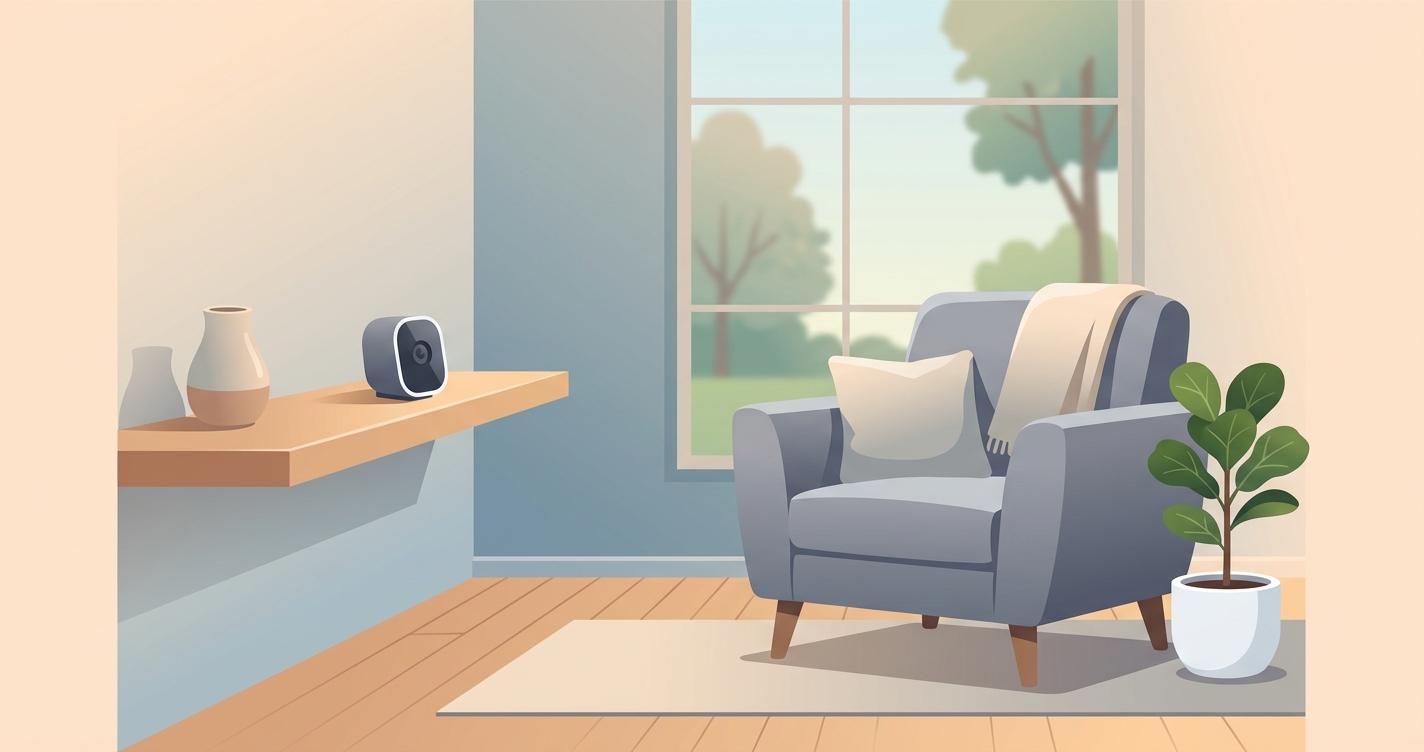
By installing optical sensors in resident rooms, operators can conduct daily health checks passively. Staff can monitor an entire floor's respiratory and heart rates from a central nursing dashboard, only physically entering a room when the data indicates an abnormal reading or an emergency. Furthermore, residents with cognitive decline cannot reliably consent to complex monitoring protocols and frequently remove wearable devices, perceiving them as foreign objects. Passive sensors mounted securely on a wall or shelf eliminate this friction entirely.
Pace programs and home health agencies
Program of All-Inclusive Care for the Elderly (PACE) organizations and home health agencies face the unique logistical challenge of monitoring high-risk patients who live miles away in the community. Dispatching a registered nurse just to check routine vital signs is expensive, time-consuming, and operationally inefficient for agencies struggling with staffing shortages.
Traditional remote patient monitoring (RPM) kits attempt to solve this by sending technology home with the patient, but they require the senior to apply a blood pressure cuff or pulse oximeter correctly every single day. For frail adults or those with arthritis, this is a significant physical barrier. Passive camera-based vital checks allow agencies to track their patient panels daily without requiring the patient to do any work. If a senior's resting heart rate spikes or their resting respiratory rate climbs steadily over a 48-hour period, the care team receives an alert. They can then intervene early with a telehealth call or targeted home visit, potentially preventing a costly emergency department transfer or hospital readmission.
Current research and evidence
Recent academic studies validate both the technical feasibility and the overwhelming patient preference for non-intrusive elderly care systems over traditional surveillance.
A 2023 scoping review conducted by Wang et al. and published in the Journal of Medical Internet Research examined older adults' perceptions of Active and Assisted Living (AAL) technologies. The researchers found that older adults are highly resistant to traditional video monitoring, often citing a deep fear of constant surveillance and a loss of autonomy. The study noted that the "nudity aspect of privacy" is a primary concern for seniors in assisted living environments. However, the researchers also found that when privacy-preserving techniques are clearly explained - specifically that the technology strips away visual identifiers and only transmits numerical data - acceptance rates among older adults rise significantly.
On the technical and clinical side, research published by Sun et al. in medRxiv (2024) tested the accuracy of remote photoplethysmography for vital sign extraction in real-world environments. The study confirmed that camera-based monitoring can effectively extract heart rate and respiratory rate data. The researchers specifically noted that this contactless technology is highly beneficial for frail individuals and older adults, where traditional skin-contact sensors or adhesive patches might cause skin tearing, irritation, or general physical discomfort.
The future of non-intrusive elderly care
The future of senior care monitoring is moving entirely toward ambient sensing. As optical sensing algorithms become more sophisticated and edge computing becomes more powerful, these systems will track a broader range of physiological markers without ever requiring physical interaction from the patient.
In the coming years, we will see a transition where the physical camera hardware becomes smaller and blends perfectly into the room's architecture, mimicking the appearance of standard smart home speakers or smoke detectors. This industrial design evolution is critical, as human-computer interaction studies show that older adults respond better to technology that does not look like medical equipment or security cameras.
Senior living operators will increasingly market these non-intrusive elderly care systems as a premium, privacy-first safety feature to prospective residents and their adult children. They will be able to prove that they can provide hospital-level data observation without turning a comfortable residential apartment into a sterile clinical room. For home health agencies and PACE programs, passive ambient monitoring will transition from an innovative pilot program to a standard operational requirement for managing chronic care patients at scale.
Frequently asked questions
How does a camera check vital signs without actually watching the senior? Advanced optical sensors use a technology called remote photoplethysmography (rPPG). The sensor measures the imperceptible changes in ambient light reflecting off the human skin as blood pumps through the face. It calculates heart rate and respiratory rate from these microscopic light variations rather than recording or analyzing a visual video feed. The system processes the light data locally and only sends numerical vital signs to the care team.
Will residents accept cameras in their private assisted living rooms? Seniors strongly reject traditional security surveillance cameras. However, research consistently shows that when care providers explain that the system is a passive health sensor that does not record or stream video, acceptance rates increase dramatically. Complete transparency about how data is processed, stored, and anonymized is critical for building trust with residents and their families.
What happens if the senior forgets to interact with the monitoring system? The primary benefit of passive monitoring is that it requires absolutely zero interaction from the senior. There are no batteries to charge, no blood pressure cuffs to apply, and no panic buttons to press. The optical sensor captures data automatically as long as the senior is within its field of view, making it an ideal solution for individuals with mobility limitations or cognitive decline.
Can optical monitoring completely replace home health nursing visits? Passive sensors are not a total replacement for in-person nursing care or physical assessments. Instead, they act as a continuous early warning system. By providing daily objective vital sign trends, the technology helps clinical teams prioritize which patients actually need an immediate home visit or intervention, thereby optimizing limited nursing staff resources.
For senior living operators, PACE programs, and home health agencies looking to implement non-intrusive daily health checks for seniors, Circadify offers a reliable, privacy-first solution. By utilizing optical sensors that process data locally, care teams can acquire continuous health trends without requiring older adults to wear cumbersome devices or remember to press buttons. To learn how to integrate passive, privacy-preserving vital sign tracking into your care model and keep patients safer in their own environments, explore the Circadify hospital at home solutions program today.