How do PACE programs keep track of participant health every day?
How PACE programs use health tech for daily participant monitoring, care coordination, and hospitalization prevention. A field guide for program directors.
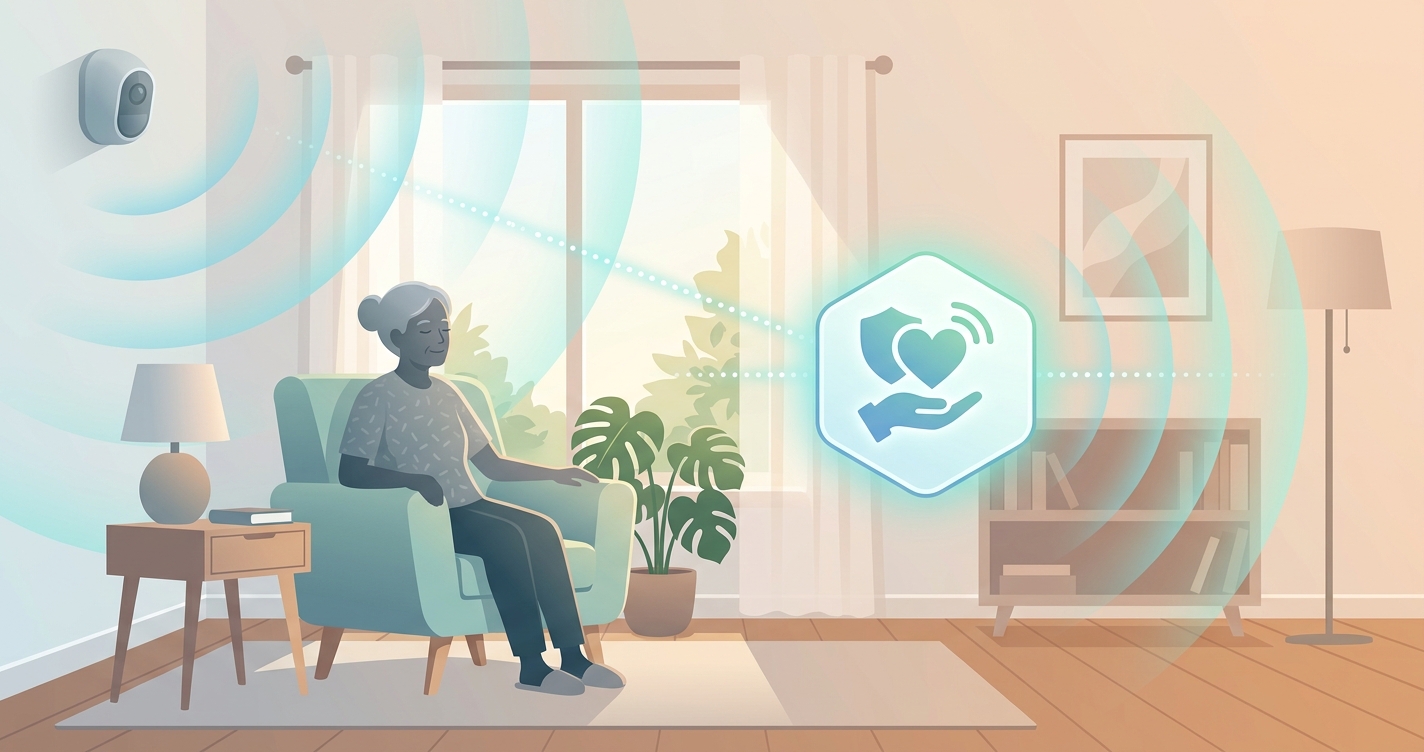
Programs of All-Inclusive Care for the Elderly carry a uniquely heavy clinical mandate: they accept full financial risk for a frail, nursing-home-eligible population while keeping those participants safely in their own homes. That model only works when the interdisciplinary team can see changes in a participant's condition before they become emergencies, which is why PACE program health tech has moved from a back-office curiosity to an operational necessity. The question facing directors today is not whether to monitor participants between center visits, but how to assemble a daily picture of health across a census that may only physically appear at the day center a few times a week.
164 PACE organizations served 76,377 enrollees across 32 states and the District of Columbia, with enrollment up 53.1% from 2020 to 2025, according to the National PACE Association and ATI Advisory.
What PACE program health tech actually does day to day
The defining feature of PACE is total integration. A single interdisciplinary team is responsible for primary care, specialty referrals, therapy, transportation, social work, and long-term services. More than 80% of participants are dually eligible for Medicare and Medicaid, and most carry multiple chronic conditions. Because the program is capitated, every avoidable hospital stay is a direct cost rather than a billable event. That financial structure makes daily visibility into participant health the single highest-use activity a program can invest in.
PACE program health tech generally serves four jobs that the day center model alone cannot cover:
- Filling the gap between center days, when a participant who attends twice weekly is unobserved for five days at a time.
- Surfacing trend changes such as a slow climb in heart rate or a drop in nighttime activity that precede a fall, infection, or heart failure exacerbation.
- Feeding objective data into the interdisciplinary team meeting so care plan adjustments are based on measurements, not just self-report.
- Triggering a nurse call, a home visit, or a transportation dispatch before a small problem becomes an ambulance ride.
During the COVID-19 pandemic, PACE organizations rapidly expanded telehealth and in-home remote monitoring, and a 2021 study in the Journal of the American Geriatrics Society documented that many planned to keep those services permanently. What began as an emergency adaptation became a structural change in how programs watch over participants.
Comparing daily monitoring approaches
No single method captures everything, and most mature programs run a blend. The table below compares the main approaches PACE teams use to track participant health between visits.
| Monitoring approach | Daily data captured | Participant burden | Best fit within PACE |
|---|---|---|---|
| Center-day vitals only | Periodic, 1-3 days per week | Low (done at center) | Baseline clinical record |
| Telephonic check-in calls | Self-reported symptoms | Low, but relies on recall | Social contact, triage |
| Wearable devices | Heart rate, steps, sometimes SpO2 | High (charging, compliance) | Tech-comfortable participants |
| Connected peripherals (cuffs, scales) | Blood pressure, weight | Medium (requires action) | Heart failure, hypertension cohorts |
| Telehealth video visits | Visual assessment on demand | Medium (scheduling) | Post-acute follow-up |
| Passive contactless monitoring | Vital sign trends, activity, sleep | Minimal (no device worn) | Whole-census daily baseline |
The trade-off most directors weigh is compliance versus completeness. Wearables and connected peripherals produce rich data, but only when a participant remembers to charge, wear, or use them. For a population with cognitive impairment and limited dexterity, adherence often decays within weeks. Contactless and passive approaches lower the burden to near zero, which matters when the goal is a consistent daily signal rather than an occasional spot reading.
Industry applications across the PACE workflow
Care coordination and the interdisciplinary team
The interdisciplinary team meeting is where PACE care decisions get made. When daily monitoring data flows into that meeting, the conversation shifts from "Mrs. Alvarez says she feels tired" to "Mrs. Alvarez's resting heart rate has risen 12 beats over four nights and her weight is up three pounds." Integrated PACE operating platforms increasingly give the team real-time access to participant information and care plans, so a nurse, dietitian, and physician are reacting to the same data set. That shared view is what converts monitoring from a stack of numbers into coordinated action.
Hospitalization and emergency department prevention
Avoiding acute utilization is the economic engine of PACE. Evidence from adjacent remote care models is encouraging: a study of Medicare patients with chronic disease using data from July 2022 to October 2023, published in Mayo Clinic Proceedings, found a remote patient care program reduced total cost of care and hospitalizations, including a 64% reduction for heart failure and a 57% reduction for sepsis or infection. While that study was not PACE-specific, the participant profiles overlap heavily with PACE censuses, and the mechanism is identical: catch deterioration early enough to intervene at home.
Staffing use in a tight labor market
PACE programs face the same workforce shortages as the rest of long-term care. Technology, including automation and AI-assisted triage, is being used to streamline documentation and flag the participants who most need attention, letting clinical staff spend time where it counts. Daily monitoring acts as a force multiplier: instead of calling every participant every day, a nurse reviews exceptions and concentrates outreach on the handful whose trends have shifted.
Current research and evidence
The research base supports the core PACE thesis. The model is consistently linked to lower hospital and nursing home admissions, reduced mortality, and improved care quality compared with similar populations. The National PACE Association reports that 95% of family caregivers would recommend PACE, a satisfaction signal tied in part to the program's ability to keep participants stable at home.
The evidence on remote monitoring itself is more nuanced, and directors should hold realistic expectations. The Mayo Clinic Proceedings analysis showed meaningful reductions in cost and hospitalization for chronic-disease cohorts. Yet a separate 2023 study examining remote monitoring for patients discharged after sepsis or lower respiratory infection found it did not outperform usual care on days at home, and for some older patients it was associated with higher readmission rates. The lesson is not that monitoring fails, but that monitoring without a clear clinical response protocol can generate noise rather than benefit. The technology is only as good as the team workflow it feeds.
Key takeaways from the current literature:
- Continuous data plus a defined escalation pathway reduces avoidable utilization; data alone does not.
- Chronic conditions common in PACE, especially heart failure and infection risk, respond well to trend-based early detection.
- Low-burden capture methods improve the completeness of daily data in cognitively impaired populations.
The future of PACE program health tech
Three shifts are likely to define the next several years. First, expect a move from device-dependent monitoring toward passive, ambient capture that requires nothing of the participant. With enrollment growing more than 50% across the last five years, programs cannot scale a model that depends on every frail participant managing a gadget. Second, predictive analytics will mature from simple threshold alerts toward models that recognize the multi-signal patterns preceding a fall or exacerbation, giving teams a longer head start. Third, interoperability between monitoring platforms and PACE operating systems will tighten, so daily home data and center records live in one continuous chart rather than separate silos.
The programs that benefit most will treat technology as an extension of the interdisciplinary team rather than a replacement for it. The signal still has to land in front of a human who can act, dispatch, or adjust a care plan. Daily monitoring simply ensures that human is looking at the right participant at the right moment.
Frequently asked questions
How often do PACE programs need participant health data to be useful? Daily trend data is the practical target. Because many participants attend the day center only a few times per week, the days in between are where deterioration goes unseen. A consistent daily signal lets the interdisciplinary team spot a drift in heart rate, weight, or activity before it becomes an emergency.
Do participants have to wear devices for PACE monitoring to work? Not necessarily. Wearables and connected cuffs produce useful data but depend on participant compliance, which is difficult in populations with cognitive or dexterity limitations. Passive and contactless approaches capture trends with minimal participant action, which improves data completeness across a census.
Does daily monitoring actually reduce hospitalizations in PACE-like populations? Research on remote patient care in chronic-disease Medicare cohorts shows meaningful reductions in hospitalization and cost. The benefit depends heavily on pairing the data with a clear clinical response protocol; monitoring without a defined escalation workflow shows weaker results.
How does monitoring data fit into the interdisciplinary team meeting? It converts subjective reports into objective trends. When nurses, physicians, dietitians, and social workers review the same daily data, care plan adjustments become evidence-based and coordinated rather than reactive.
PACE directors weighing how to extend daily visibility across a growing, high-acuity census are exactly the audience Circadify is building for. Our team is developing non-intrusive daily health checks designed to support care coordination and early intervention in the home, without asking frail participants to wear or operate anything. To see how a hospital-at-home monitoring approach can complement the PACE model, explore the Senior care program solution.