
How can we keep our PACE program participants engaged with their health without extra staff?
PACE program health tech can sustain participant engagement and daily health visibility without adding nurses or aides. A look at the operational evidence.
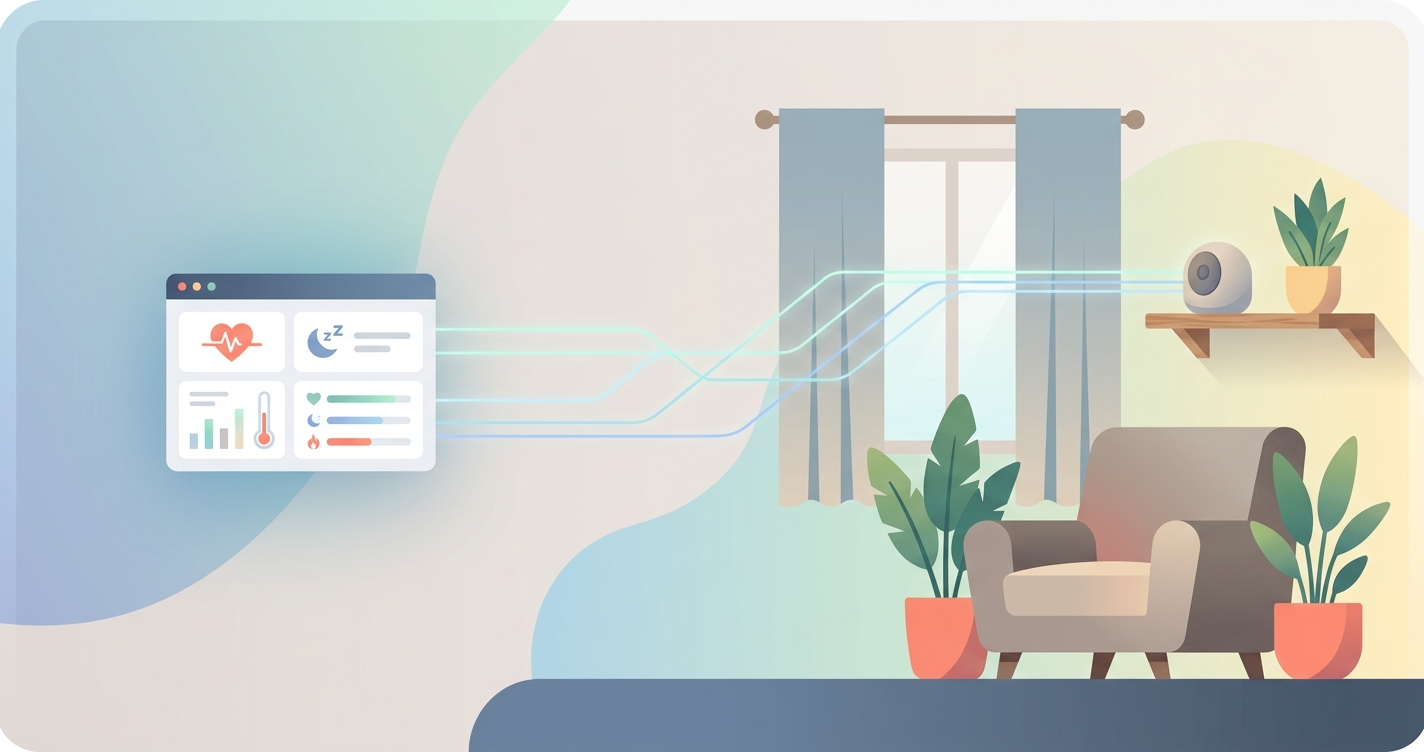
Every PACE director eventually runs into the same arithmetic problem. Enrollment is climbing, participant acuity is rising, and the workforce needed to manage daily engagement is not growing fast enough to keep up. The Program of All-Inclusive Care for the Elderly was built on a capitated, fully integrated model that rewards keeping frail older adults healthy and out of the hospital, which means participant engagement is not a soft metric. It is the engine of the whole financial and clinical model. The pressing question for operators in 2025 is whether PACE program health tech can carry more of that engagement load without forcing another round of hiring that the labor market simply cannot supply.
PACE enrollment has grown roughly 50% since 2019 to more than 76,000 participants, yet 97% of PACE directors report a workforce shortage and 92% report difficulty filling open positions, according to workforce reporting summarized by Altarum (2024).
Why PACE program health tech is now an operational necessity
The defining tension in PACE is that the model demands intimate, continuous knowledge of each participant while the staffing required to produce that knowledge keeps getting harder to maintain. Interdisciplinary teams are expected to know when a participant's blood pressure is drifting, when sleep is fragmenting, when appetite is falling off, and when a quiet decline is turning into an acute event. Historically that visibility came from day-center attendance, home visits, and phone outreach. All three are staff-intensive, and all three are exactly the activities that suffer first when nurses, personal care aides, and drivers are in short supply.
PACE program health tech changes the unit economics of that visibility. Instead of treating each data point as the product of a staff interaction, monitoring technology generates a continuous baseline that the team reviews by exception. The participant stays engaged with their own health through daily, low-effort checks, and staff time shifts from collecting routine numbers to acting on the ones that matter. The goal is not to replace the interdisciplinary team. It is to stop spending scarce clinical hours on tasks that do not require clinical judgment.
This matters because PACE participants are, by definition, nursing-home eligible. Research summarized in a 2024 scoping review in the MDPI literature found that PACE enrollment is associated with reduced hospitalization, improved care quality, and greater participant satisfaction relative to comparison programs. Those outcomes depend on catching change early, and catching change early depends on data density that manual workflows struggle to sustain at scale.
| Engagement approach | Staff burden | Engagement frequency | Early-warning value | Participant effort |
|---|---|---|---|---|
| Day-center attendance only | High (transport + on-site staff) | 2-4 days/week | Moderate, gaps between visits | Moderate to high |
| Scheduled home visits | Very high (travel + clinical time) | Weekly to monthly | Episodic | Low |
| Phone and check-in calls | Moderate (staff time per call) | Variable | Low, self-reported only | Moderate |
| Wearable-based monitoring | Moderate (charging, compliance) | Daily if worn | High when adherent | High (devices, charging) |
| Non-intrusive daily health tech | Low (review by exception) | Daily, passive | High, trend-based | Minimal |
The engagement problem hiding inside the staffing problem
Engagement and staffing are usually discussed as separate issues, but in PACE they are the same problem viewed from two angles. When staff are stretched, the first casualties are the small, repeated touches that keep participants connected to their care plan. Missed check-in calls, deferred home visits, and reduced day-center contact all erode the relationship that drives adherence.
The operational reality looks like this:
- Workforce shortages hit the home-based roles hardest, which are precisely the roles that produce between-visit health visibility.
- Participants who feel unmonitored disengage, and disengagement raises the risk of an unmanaged exacerbation.
- Every avoidable emergency department visit or hospitalization consumes capitated dollars and pulls the team into reactive mode.
- Reactive care consumes even more staff time, which deepens the original shortage.
Breaking that loop requires a way to keep participants engaged that does not scale linearly with headcount. That is the specific gap PACE program health tech is meant to fill: daily visibility that holds steady even when the staffing roster does not.
Industry Applications
Day-center and home coordination
A meaningful share of PACE participants split their week between the day center and home. Continuous monitoring at home extends the team's awareness into the days a participant is not on-site, so the interdisciplinary team arrives at each center visit already knowing what changed. That turns a general check-in into a targeted conversation, which is a more efficient use of both the participant's time and the clinician's.
Triage and visit prioritization
When daily data flows by exception, schedulers and nurses can rank home visits by need rather than by calendar. A participant whose resting heart rate and sleep have shifted over several nights moves up the list. A participant whose trends are stable can safely wait. This is how a fixed staff roster covers a growing panel without proportional hiring.
Participant empowerment
Engagement is not only about staff watching participants. It is about participants seeing their own patterns. Daily, non-intrusive checks give older adults a low-friction way to stay involved in their health, which reinforces the sense of agency that PACE is designed to protect. California's adoption of the Integrated Satisfaction Measurement for PACE (I-SAT) survey in December 2023 signals how seriously the field now treats the participant experience as a measurable quality domain.
Current research and evidence
The evidence base points consistently toward early detection and sustained contact as the levers that drive PACE outcomes. The 2024 MDPI scoping review comparing PACE to other programs documented lower hospitalization and mortality alongside higher satisfaction, outcomes that hinge on the program's ability to notice change before it becomes an emergency.
On the workforce side, the picture is sobering. Reporting summarized by Altarum (2024) found that 97% of PACE directors experienced a workforce shortage and 92% had difficulty filling positions, with home-based personal care staff, nurses, and drivers most affected. ATI Advisory (2024) documented the parallel growth story: enrollment up roughly 50% since 2019 to 76,377 participants with the number of PACE organizations up 26% over the same period. Demand is rising faster than the labor supply that traditionally meets it.
There is also a durable signal on engagement quality. Industry outcome summaries report that roughly 95% of family caregivers would recommend PACE and that disenrollment sits near 7%, indicating that participants and families value the model when its high-touch promise is actually delivered. Technology that protects that high-touch feel during a staffing squeeze is therefore defending the program's core differentiator, not adding a gadget on top of it.
A practical note on participant fit: passive, camera-based or contactless approaches address a known weakness of wearable programs in this population. Devices that must be worn and charged depend on consistent participant action, which is difficult for frail or cognitively impaired adults. Removing the device removes the adherence problem, which is one reason non-intrusive monitoring tends to sustain higher effective engagement over time.
The Future of PACE program health tech
The near-term direction is toward monitoring that fades into the background of daily life while feeding richer signals to the interdisciplinary team. Several shifts are likely to define the next few years:
- Exception-based workflows will become the default, with teams reviewing flagged changes rather than scrolling through raw data.
- Trend analysis across multiple vital signs will matter more than any single reading, because gradual drift predicts decline better than isolated values.
- Participant-facing simplicity will be a competitive requirement, since any technology that demands effort from frail adults will see engagement decay.
- Integration with care-plan documentation will reduce the administrative tax that currently eats into clinical time.
As CMS continues to expand PACE access, the programs that thrive will be the ones that decouple engagement from headcount. Technology will not eliminate the need for skilled staff, but it can make each staff hour reach further, which is the only sustainable answer to a model that is growing faster than its workforce.
Frequently asked questions
Does adding health technology mean replacing PACE staff?
No. The aim is to redirect staff time, not reduce it. Monitoring handles routine data collection so nurses and aides can concentrate on clinical judgment, relationship building, and the participants whose trends show change. In a market where 92% of programs struggle to fill roles, the realistic goal is making existing staff more effective.
How does monitoring keep participants engaged rather than just observed?
Daily, low-effort checks give participants a consistent touchpoint with their own health and a reason to stay involved in their care plan. When participants can see their own patterns and know their team is watching trends, they remain connected even on days they are not at the center, which supports the satisfaction levels PACE is known for.
Why is non-intrusive monitoring a better fit than wearables for PACE participants?
Many PACE participants are frail or cognitively impaired, which makes wearables that require charging and consistent wear difficult to sustain. Non-intrusive approaches that need no device worn by the participant remove that adherence barrier, producing more reliable daily data with less effort from both the participant and the staff.
Can this approach scale as our census grows?
Yes, that is the central advantage. Because review happens by exception, a fixed team can monitor a larger panel without proportional hiring. As PACE enrollment continues its roughly 50% growth trend, decoupling visibility from headcount is what allows programs to expand without overextending staff.
PACE programs and home health agencies facing the same engagement-versus-staffing squeeze are exactly the operators Circadify is building for, with non-intrusive daily health checks designed to sustain participant visibility without adding to the workload. To see how this fits a senior care program, explore the approach at circadify.com/solutions/hospital-at-home.