What if my parent's breathing changes suddenly at night, and I don't know?
A research look at how senior remote monitoring detects sudden nocturnal breathing changes and alerts family caregivers and home health teams in time.
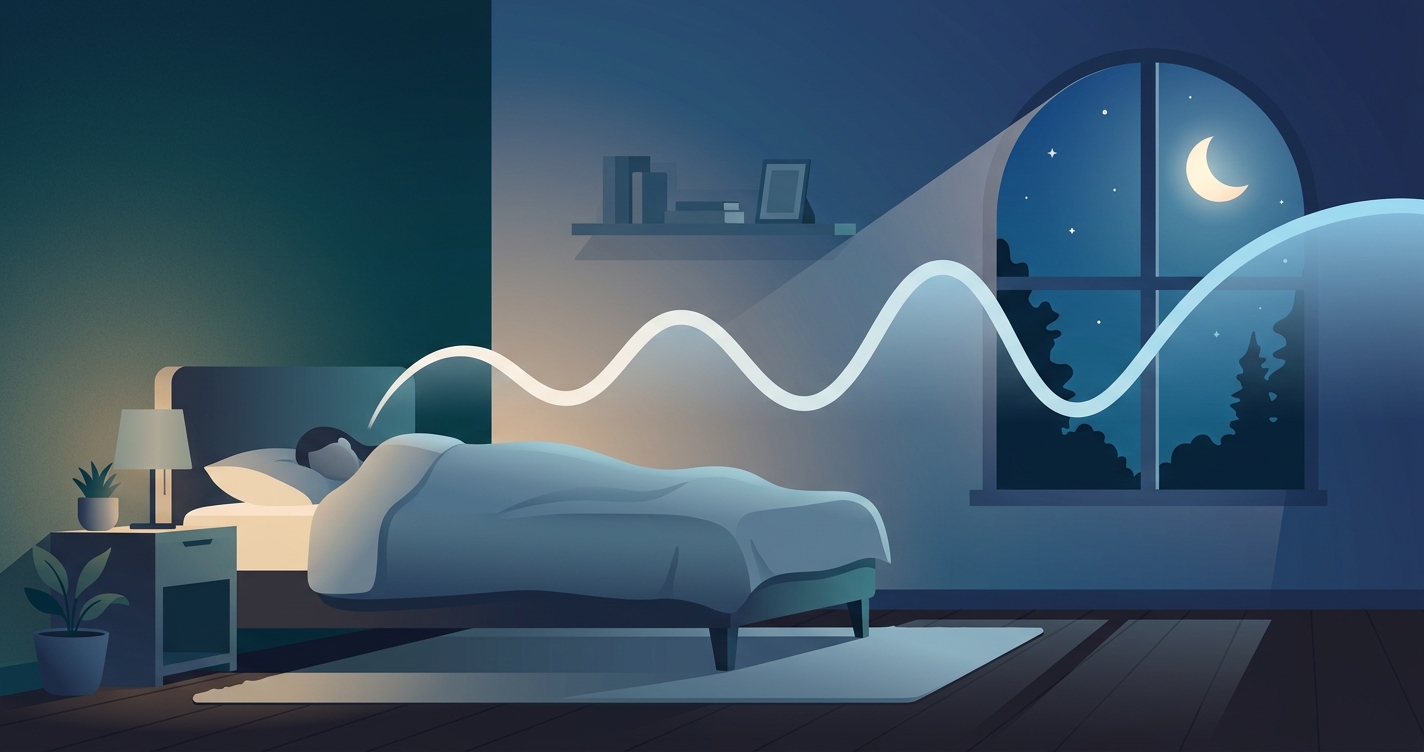
If you have ever woken at 3 a.m. with a knot in your stomach, wondering whether your father is breathing normally one floor down or three states away, you already understand the specific dread this article addresses. Nighttime is when the human safety net thins out. There is no day-shift nurse, no spouse listening for a cough, no daughter dropping by with groceries. For the millions of adults caring for aging parents, the unsupervised overnight stretch is the single most anxious gap in the care plan, and it is exactly the gap that senior remote monitoring is designed to close. Sudden changes in breathing during sleep are not rare events. They are common, often silent, and frequently the earliest physical signal that something is going wrong.
A 2022 systematic review and meta-analysis by Ramin Senaratna and colleagues found the pooled prevalence of obstructive sleep apnea among older adults to be 35.9 percent, meaning roughly one in three seniors experiences clinically significant breathing disturbance during sleep.
Why senior remote monitoring focuses on breathing at night
Respiratory rate is one of the most informative vital signs in geriatric care, and it is also the most neglected. Multiple deterioration studies, including a scoping review summarized in the literature on early warning systems, have shown that respiratory rate is often the first vital sign to deviate when an older adult is heading toward a serious event such as pneumonia, heart failure decompensation, or sepsis. The problem is timing. These shifts frequently begin or worsen overnight, hours before a caregiver would notice confusion, fatigue, or shortness of breath in daylight.
Senior remote monitoring matters here because it watches the part of the day no human can. A typical breathing change that should concern a caregiver is not a single dramatic gasp. It is a trend: a resting respiratory rate that creeps from a baseline of 16 breaths per minute to 24 over several nights, or repeated pauses and irregular patterns that fragment sleep. These patterns are nearly impossible to catch by standing in a doorway, yet they are precisely what continuous overnight measurement is built to surface.
Older adults are also disproportionately vulnerable to the conditions that breathing changes warn about. Sepsis incidence and mortality both rise sharply with age, and respiratory tract infection is a leading trigger in elderly patients. When the warning sign and the high-risk population overlap this strongly, the case for monitoring the overnight window becomes hard to ignore.
How monitoring approaches compare
Families and home health agencies have several options for keeping watch overnight, and they differ sharply in burden, coverage, and reliability. The table below frames the practical trade-offs.
| Approach | Overnight coverage | Burden on the senior | Detects gradual breathing trends | Best suited for |
|---|---|---|---|---|
| In-person checks | Intermittent, only when someone is present | Disrupts sleep | No, snapshots only | Live-in caregivers |
| Phone calls and texts | None while asleep | Low but easy to miss | No | Independent, alert seniors |
| Wearable devices | Continuous if worn | Requires charging and compliance | Yes, when worn | Tech-comfortable users |
| Panic buttons | Reactive only | Requires the senior to act | No | Fall and emergency response |
| Contactless monitoring | Continuous and passive | None, no device to wear | Yes | Aging in place, dementia, frailty |
The pattern across these options is consistent. Methods that require the senior to do something, whether wearing a band or pressing a button, fail at the exact moment they are needed most, when a person is asleep, confused, or too weak to act. This is the structural reason contactless approaches have drawn research attention for the older population.
Key advantages caregivers and agencies tend to prioritize:
- Passive operation, so there is nothing to charge, wear, or remember
- Trend detection across multiple nights rather than isolated readings
- Alerting that distinguishes a meaningful change from normal night-to-night variation
- Coverage of the overnight hours when staffing and family presence are lowest
- Data that can be shared with a home health nurse or primary care provider
Industry applications of overnight breathing monitoring
Family caregivers managing from a distance
For adult children, the value is less about a single alert and more about the removal of constant uncertainty. Remote monitoring replaces the late-night guessing with an objective baseline. When breathing rate stays within an individual's normal overnight range, no news is genuinely good news. When it drifts, the caregiver learns about it early enough to call, visit, or escalate rather than discovering a crisis the next morning.
Home health agencies and visit prioritization
Home health agencies operate under chronic staffing constraints and rising patient acuity. Continuous overnight breathing data helps clinical teams triage which patients need a visit today versus next week. A patient whose nighttime respiratory rate has climbed for three consecutive nights moves up the queue. This kind of objective trend data also supports the documentation agencies must produce for assessment and quality reporting.
PACE programs and senior living operators
Programs of All-Inclusive Care for the Elderly and senior living operators share a goal of preventing avoidable emergency transfers. Overnight breathing trends give interdisciplinary teams a leading indicator they can act on during business hours, often heading off a deterioration before it requires an ambulance. For operators, the ability to show families that breathing is being watched all night is also a meaningful trust signal.
Current research and evidence
The scientific foundation for senior remote monitoring of breathing has strengthened considerably. An exploratory study published in JMIR examined contactless sleep monitoring for early detection of health deteriorations in community-dwelling older adults, concluding that longitudinal, passive monitoring can reveal shifts in health trajectory that intermittent checks miss entirely.
A separate digital health technology evaluation study, posted on medRxiv, assessed contactless monitoring of heart rate, breathing rate, and breathing disturbance during sleep in aging populations. The researchers reported acceptable accuracy for estimating breathing rate and breathing disturbance against reference methods, supporting the feasibility of unobtrusive overnight measurement outside a sleep lab.
These findings sit on top of the deterioration literature. The respiratory rate scoping review work establishes that breathing is an early and sensitive marker, and the OSA prevalence data from Senaratna and colleagues establishes that breathing disturbance is widespread in this age group. Together they make a clear research case: the signal is common, it is meaningful, and it can now be captured without disturbing the person being monitored. Researchers do note pitfalls, including the need to distinguish clinically relevant change from ordinary night-to-night variation, which is why trend analysis over multiple nights matters more than any single reading.
The future of senior remote monitoring
The direction of the field points toward systems that interpret rather than merely record. The next stage is personalized baselines, where each senior's own normal overnight breathing range becomes the reference, so alerts reflect a real departure for that individual rather than a generic threshold. Integration is the second frontier. Breathing data is most useful when it lives alongside heart rate, sleep quality, and movement patterns, allowing a fuller picture of an emerging problem.
A third trend is the shift from wearables and contact sensors toward fully passive, camera-based and ambient measurement, which removes the compliance barrier that has limited adoption among frail and cognitively impaired seniors. As home health, PACE, and senior living organizations face growing acuity with flat staffing, the economic logic favors monitoring that scales without adding nightly human labor. Breathing, captured passively and analyzed for trends, is positioned to become a standard component of aging in place rather than a specialty add-on.
Frequently asked questions
What kinds of breathing changes should worry a caregiver overnight?
The most important signal is a sustained trend rather than a single event. A resting respiratory rate that rises several breaths per minute above a person's normal baseline across multiple nights, frequent pauses in breathing, or newly irregular and labored patterns all warrant attention. Research identifies rising respiratory rate as an early marker of deterioration, so the goal is to catch the trend before symptoms appear in daylight.
Can breathing be monitored at night without my parent wearing anything?
Yes. Contactless and camera-based approaches measure breathing and other vital signs passively, with no band to wear or button to press. Evaluation studies of contactless overnight monitoring have reported acceptable accuracy for breathing rate, which is why these methods are favored for seniors who will not reliably wear or charge a device.
Is occasional irregular breathing during sleep always a medical emergency?
Not necessarily. Breathing disturbance during sleep is common in older adults, with obstructive sleep apnea affecting roughly one in three. That prevalence is exactly why trend monitoring is valuable. It helps separate a chronic, manageable pattern from a new and worsening change that should prompt a clinical call.
How does overnight monitoring help home health agencies specifically?
It provides objective trend data during the hours no clinician is present, which supports visit prioritization, earlier intervention, and the documentation required for assessment and quality reporting. A patient with a climbing nighttime respiratory rate can be moved up the visit schedule before a small problem becomes an emergency transfer.
Circadify is building toward this future of non-intrusive overnight health checks for seniors, watching the breathing and vital sign trends that unfold while everyone else is asleep, and surfacing the ones that matter to the people responsible for care. To see how passive, camera-based monitoring fits into a senior care program, explore the senior care program at Circadify.