Can senior living communities truly monitor resident health without invading privacy?
How non-intrusive senior living health monitoring respects resident privacy while supporting safety, with research on acceptance, consent, and contactless technology.
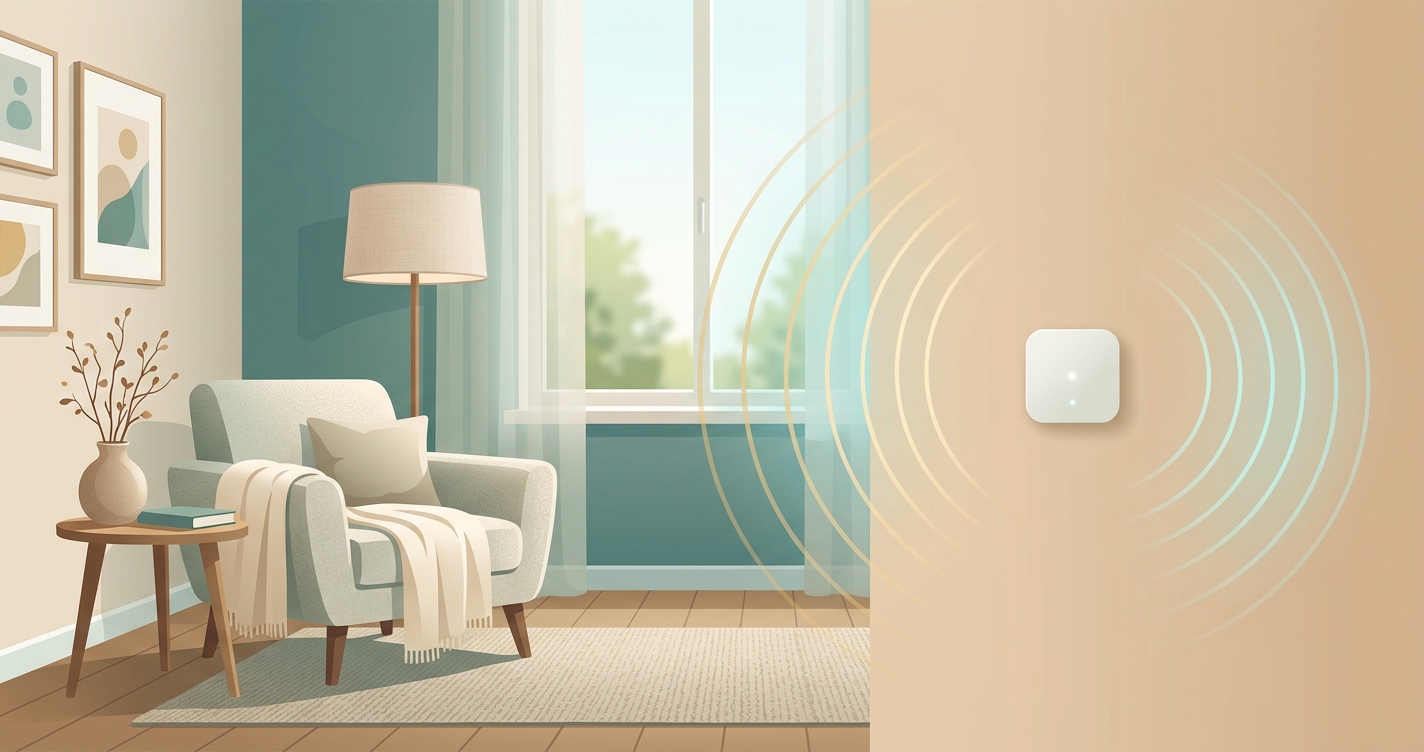
Senior living operators sit on a genuine contradiction. Families and regulators expect near-constant awareness of resident well-being, yet the same residents value the dignity and autonomy that drew them to a community rather than a hospital ward. The tension is sharpest around senior living health monitoring, where the tools that promise the most safety information are often the ones that feel most like surveillance. The question is no longer whether monitoring works. It is whether a community can gather meaningful health signals while still treating a resident's apartment as a private home rather than a clinical observation room.
A 2023 scoping review published in the Journal of Medical Internet Research found that privacy is a primary barrier to adoption of video-based active and assisted living technologies, even when older adults clearly recognize the safety and medical benefits those systems provide.
That finding captures the operator's dilemma exactly. The value is understood. The discomfort is real. And the discomfort, left unaddressed, becomes refusal, complaints, and underused technology that never delivers its promised return.
What senior living health monitoring actually requires
The phrase "senior living health monitoring" covers a wide spectrum of technologies, and they are not equally intrusive. A continuous video feed and a contactless radar sensor both produce health-relevant data, but they sit at opposite ends of the privacy scale. Understanding that spectrum is the first step toward a defensible monitoring program.
The most important distinction is between monitoring that captures identity-revealing content and monitoring that captures only physiological signals. A camera that records recognizable images of a resident dressing or bathing collects far more than the community needs to assess respiratory rate or detect a fall. A sensor that extracts heart rate or movement patterns without storing recognizable footage collects only what is clinically useful. Both can sit in the same room, but they carry very different consent and risk profiles.
Research supports this intuition. A study published in PMC examining willingness to share data after exposure to unobtrusive in-home monitoring found that older adults were more accepting of systems that did not capture video images, and that perceived control over who accessed the data mattered more than the data itself. People are not opposed to being known. They are opposed to being watched without say.
Here is how the common approaches compare on the dimensions operators actually weigh.
| Monitoring approach | Privacy intrusion | Resident burden | Health signal depth | Typical resident acceptance |
|---|---|---|---|---|
| Continuous video surveillance | High | Low | Moderate | Low |
| Wearables and pendants | Low | High (must wear, charge, remember) | Moderate | Mixed |
| Manual staff vitals rounds | Moderate (entry into private space) | Moderate | High but infrequent | High |
| Radar and contactless sensors | Low | Very low | Moderate to high | High |
| Camera-based contactless vitals (no recorded footage) | Low to moderate | Very low | High | Moderate to high |
The pattern is clear. The approaches residents reject most are the ones that either record identifiable images continuously or demand constant effort from the resident. The approaches they tolerate well are those that work passively in the background and limit what leaves the room.
Designing privacy into a monitoring program
Privacy is not only a property of the device. It is a property of the policy wrapped around it. Operators who treat monitoring as a procurement decision rather than a governance decision tend to generate the complaints they were trying to avoid. The following practices separate defensible programs from risky ones.
- Collect only the data the care plan needs. If the goal is detecting deterioration, vital sign trends and activity patterns are sufficient; raw video rarely is.
- Make consent specific and revocable. Residents should know what is collected, who sees it, and how to opt out without losing other services.
- Limit access by role. A night nurse needs alert-level information; a billing administrator does not need health detail.
- Keep the data inside clear boundaries. Encryption in transit and at rest, retention limits, and audit logs convert vague promises into verifiable practice.
- Place sensors thoughtfully. Bedrooms and bathrooms demand the least intrusive technology available, never recorded video.
- Communicate continuously. A resident who understands why a sensor exists experiences it differently than one who discovers it.
These steps matter because exposure does not automatically build comfort. The same PMC research noted that some older adults reported greater privacy concern after living with in-home monitoring, not less. Trust is earned through transparency and control, not through habituation alone.
Industry applications across senior living settings
Independent and assisted living
In these settings, residents retain significant autonomy, and heavy-handed monitoring directly contradicts the value proposition of the community. Non-intrusive sensors that report vital sign and activity trends let staff notice early deterioration without entering an apartment at midnight or asking residents to wear equipment they resent. The monitoring fades into the background, which is precisely what makes it acceptable.
Memory care
Cognitive decline complicates consent and makes wearables impractical, since residents may remove or lose devices and cannot reliably report symptoms. Passive monitoring that requires nothing from the resident solves the compliance problem while raising distinct ethical questions about surrogate consent. Here the privacy framework must involve families and care teams deliberately, documenting decisions made on the resident's behalf.
Skilled nursing and higher-acuity units
Where clinical needs rise, the case for richer data strengthens, but so does the regulatory scrutiny. Operators must reconcile deeper monitoring with HIPAA obligations and state surveillance rules. Contactless approaches that deliver clinical-grade signals without recorded imagery offer a path that satisfies both the care team and the compliance officer.
Current research and evidence
The evidence base has matured quickly. The 2023 JMIR scoping review on video-based assisted living technologies identified security and medical safety as leading perceived benefits, while privacy and the feeling of constant observation ranked as leading barriers. The takeaway for operators is that residents weigh benefit against intrusion rather than rejecting monitoring outright.
Industry data echoes the demand side. AARP's technology research has repeatedly documented that the overwhelming majority of older adults want to remain in familiar settings as they age, and AARP's 2024 technology survey flagged rising concern about personal data and in-home technology even as adoption grows. Deloitte's connected-consumer research similarly found that roughly six in ten respondents worried about device security and tracking, with concern higher than the prior year. People want the safety benefit and distrust the data handling at the same time.
On the technology side, work on ultra-wideband radar published through MDPI has shown that radar can monitor presence, posture, and small chest movements tied to respiration without any camera-based imaging, and reviews in HIT Consultant have described radar-based sleep monitoring achieving accuracy comparable to traditional methods while sidestepping surveillance concerns. The engineering trend is unambiguous: it is increasingly possible to extract useful physiological signals without collecting identity-revealing content.
The Future of senior living health monitoring
Three shifts are likely to define the next phase. First, expect contactless modalities to become the default in private spaces, with recorded video reserved for common areas where expectations of privacy are lower. Second, expect consent to become granular and dynamic, letting residents and families tune what is collected as needs change rather than agreeing once at move-in. Third, expect monitoring to be judged increasingly on outcomes, with operators using trend data to reduce emergency transfers and demonstrate quality rather than simply to watch.
The communities that succeed will treat privacy not as a constraint on monitoring but as a feature of it. A program that collects less, explains more, and gives residents control will see higher acceptance, lower complaint rates, and more usable data than one that maximizes collection and hopes for tolerance. The technology to monitor health without recording private moments now exists. The differentiator is the discipline to deploy it well.
Frequently asked questions
Can a community monitor resident health without using cameras that record video? Yes. Radar, contactless sensors, and camera-based systems that extract vital signs without storing recognizable footage can report health trends without capturing identifiable images. Research on ultra-wideband radar and contactless vitals shows useful physiological data can be gathered without continuous video recording.
What makes residents most likely to accept health monitoring? Studies indicate that control matters more than the data itself. Residents accept monitoring more readily when it requires no effort from them, avoids recorded imagery in private spaces, and gives them clear, revocable consent and knowledge of who can see their information.
How do operators stay compliant while monitoring residents? Compliant programs collect only what the care plan needs, limit access by role, encrypt data, set retention limits, document consent, and align placement with HIPAA and state surveillance rules. Privacy is governed by policy as much as by the device chosen.
Do wearables solve the privacy problem? Wearables reduce visual privacy concerns but add resident burden, since they must be worn, charged, and remembered. For residents with cognitive decline this often fails. Passive, non-intrusive options frequently achieve better acceptance and more consistent data.
Circadify is building toward this exact intersection of resident dignity and reliable health awareness, developing non-intrusive daily health checks designed to fit private spaces without wearables or recorded footage. Operators evaluating how to monitor responsibly can explore the approach through Circadify's senior care and hospital-at-home program.