Wearables vs Camera-Based Monitoring for Elderly Patients: Compliance Compared
A comparison of wearable devices and camera-based monitoring for elderly patients, focusing on the critical issue of patient compliance and its impact on data reliability.
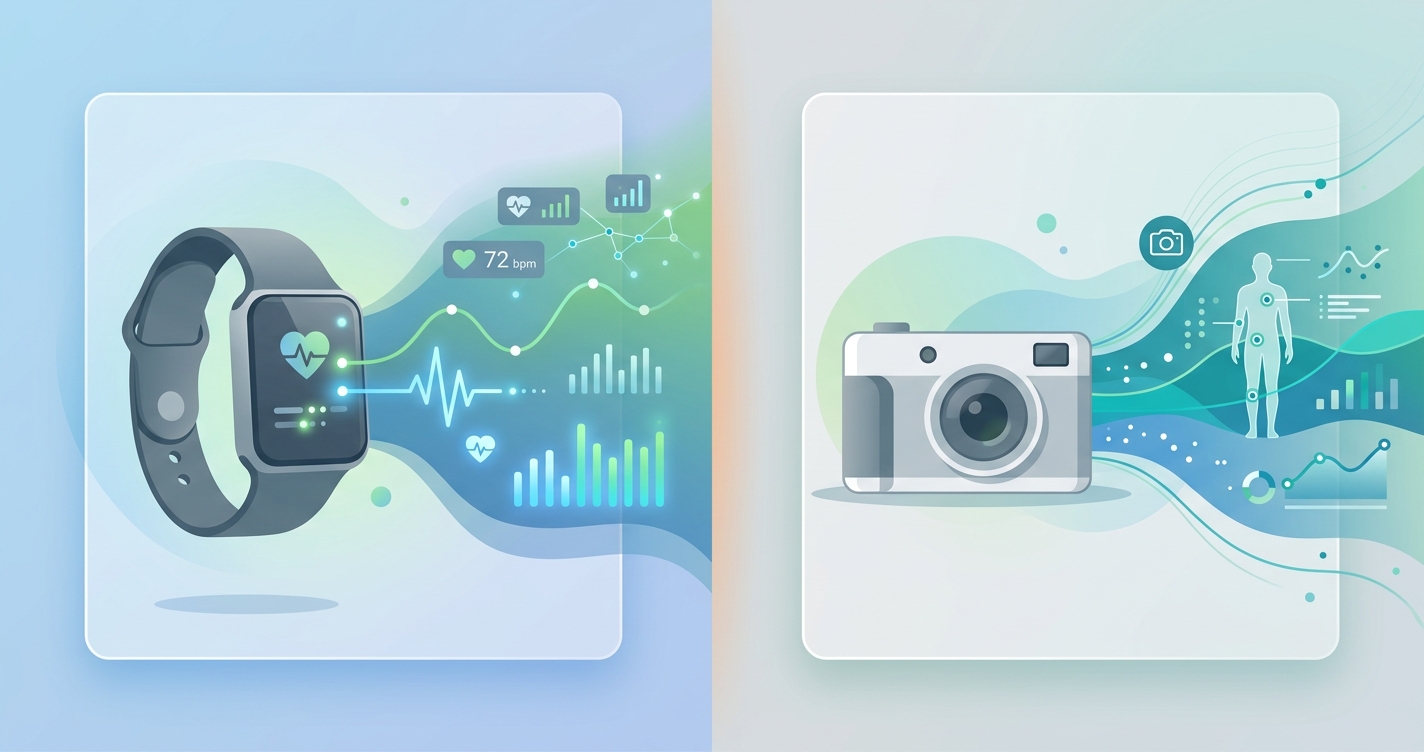
The effective use of technology in senior care hinges on a factor that is too often overlooked in product design and purchasing decisions: patient compliance. While the market is flooded with innovative remote monitoring tools, their potential to improve health outcomes is directly tied to the consistency of their use. For senior living operators, home health agencies, and PACE programs, the challenge is to choose solutions that provide reliable data without placing an undue burden on the patients or the care teams. This brings to the forefront a critical debate in modern gerontechnology: the trade-offs between active monitoring through wearables and passive monitoring through ambient sensors like cameras. The discussion around wearables vs. camera monitoring for elderly patients' compliance is not just about technology, but about understanding human behavior, cognitive load, and the practical realities of daily life for older adults.
"Long-term adherence to wearable activity trackers in older adults is generally low, with studies showing that more than half of users stop wearing the devices within a few months. Key factors for discontinuation include discomfort, the hassle of charging, and a perceived lack of usefulness." - Pérez-Jover, V., et al. (2022), The Gerontologist.
The core challenge: comparing compliance in wearables vs. camera monitoring for elderly patients
The central issue in the wearables vs. camera monitoring for elderly patients compliance debate is the distinction between active and passive data collection. Wearable devices, such as smartwatches, fitness trackers, and dedicated health monitors, require active participation from the user. The patient must remember to wear the device, ensure it is charged, and sometimes interact with it. Camera-based or other ambient, contactless systems operate passively in the background, collecting data without requiring any action from the individual. This fundamental difference is the primary driver of the significant gap in long-term compliance and data consistency between the two approaches.
For wearables, the path to non-compliance is paved with small, cumulative frustrations. Research highlights several key barriers:
- Physical Comfort: Continuous wear can lead to skin irritation, pressure sores, or general discomfort, particularly for those with fragile skin. The physical sensation of the device is a constant reminder of being "monitored."
- Cognitive Load: For an older adult, especially one with mild cognitive impairment, the daily routine of putting on a device, taking it off, and charging it can be a significant hurdle. A forgotten charging cycle results in a lost day of data, compromising trend analysis.
- Usability Issues: Small buttons, complex interfaces on paired smartphone apps, and confusing charging docks can be frustrating for individuals with dexterity or vision challenges.
- Stigma: Some older adults associate wearable monitoring devices with frailty or sickness, leading to a psychological barrier to adoption. They may remove them for social occasions or out of a desire to not see themselves as a "patient."
Camera-based monitoring, when designed for privacy-first health applications, eliminates these specific friction points. By using advanced AI to analyze video feeds for physiological and functional data, without storing or transmitting images of the person, these systems make the patient the "passive" recipient of the monitoring, not an active participant in it. The compliance, in essence, becomes 100% as long as the person is within the monitored environment.
| Feature | Wearable Devices | Camera-Based Monitoring |
|---|---|---|
| Patient Action Required | Daily (wearing, charging) | None (after initial setup) |
| Data Consistency | Dependent on adherence; prone to gaps | Continuous, passive capture |
| Comfort & Skin Integrity | Potential for irritation or discomfort | No physical contact required |
| Cognitive Load | High (remembering to wear & charge) | None for the patient |
| Installation | Simple user setup | Professional installation required |
| Privacy | User data privacy is a key concern | System & location privacy are key concerns |
| Battery Dependence | Requires frequent charging | Mains-powered, often with backup |
Industry applications for non-intrusive monitoring
The shift towards passive, non-intrusive monitoring has significant implications for professional senior care providers. The benefits extend beyond simply getting more data; they change the nature of the data itself, moving from inconsistent snapshots to a continuous health baseline.
For senior living operators
In a competitive market, demonstrating quality of care is critical. Passive monitoring allows operators to build a rich, longitudinal health record for each resident. This data can be used to detect subtle changes in gait, sleep patterns, or respiration that precede adverse events like falls or infections. It provides objective evidence of resident well-being, supports staff in prioritizing care for those most in need, and offers families a new level of transparency and peace of mind.
For PACE programs
The Program of All-Inclusive Care for the Elderly (PACE) is built on the premise of keeping frail seniors living independently in the community. Passive monitoring is a powerful tool in this mission. It provides a 24/7 safety net, alerting care teams to changes in a participant's condition that might otherwise go unnoticed between in-person visits. This early detection is critical for preventing emergency department visits and hospitalizations, which are the primary drivers of cost and disruption for PACE participants.
For home health agencies
The staffing crisis in home health is acute. Agencies are tasked with managing increasingly complex patient needs with limited personnel. Camera-based remote monitoring allows agencies to scale their reach effectively. It provides a constant stream of objective data, like respiratory rate, heart rate, and mobility, that supplements the subjective information gathered during nurse visits. This helps clinicians manage larger caseloads, triage visits more effectively, and provide proactive care rather than reacting to crises.
Current research and evidence
The challenge of wearable adherence is well-documented in academic literature. A systematic review published in The Gerontologist in 2022 by Pérez-Jover et al. analyzed numerous studies on wearable use in older adults and consistently found that while initial adoption can be high, long-term adherence is a significant problem. Discontinuation rates often exceed 50% within a year. Another systematic review by Prince, Ali, and Buckingham in 2022 confirmed these findings, noting that the perceived benefit must consistently outweigh the daily burden of use for adherence to be maintained.
Conversely, research into ambient, camera-based systems focuses on the accuracy and validation of the algorithms used to extract health data. For example, studies by researchers at institutions like Cornell Tech and the University of Toronto have demonstrated the ability to measure vital signs like heart rate and respiratory rate from video feeds with accuracy comparable to standard medical sensors. As noted by Hashim, et al. in a 2020 paper on contactless monitoring, the primary research goal is validating that the passive, convenient method produces clinically relevant and reliable data. The compliance issue is largely resolved by the technology's nature.
The future of remote senior monitoring
The trajectory is toward more integrated and intelligent systems. The future of senior care technology is not about a single device but about creating a "data-rich" environment that supports proactive, person-centered care. This involves the fusion of different sensor types, combining camera-based vital signs with data from motion sensors, bed sensors, and even smart home devices. The real power will come from the AI platforms that can synthesize this information, filter out the noise, and present care teams with actionable insights, not just raw numbers. The goal is to create a seamless ecosystem where technology empowers human caregivers and enables older adults to live more safely and independently, whether in a senior living community or in their own homes.
Frequently asked questions
Q: What is the most significant factor affecting wearable compliance in seniors? A: Research consistently points to the cumulative burden of active management. This includes the cognitive load of remembering to wear and charge the device, physical discomfort, and usability challenges with small screens or buttons. If the perceived benefit doesn't outweigh this daily effort, usage drops off quickly.
Q: Are camera-based monitoring systems an invasion of privacy? A: This is a critical concern that has been addressed by leading technology providers. Modern, privacy-first systems use on-device AI to analyze motion and physiological signals. They do not record or transmit video of the individual. The system extracts the necessary health data points (e.g., "respiratory rate is 18 bpm") locally and transmits only that encrypted data, ensuring personal privacy is maintained.
Q: Can these technologies replace the need for skilled nurses or caregivers? A: No. These technologies are tools to augment, not replace, skilled human care. They provide caregivers with more accurate and continuous data, allowing them to make better-informed clinical decisions. By handling the rote task of data collection, they free up clinicians to focus on direct patient interaction, interpretation, and care planning.
For senior care providers exploring scalable, non-intrusive monitoring solutions, it is clear that passive technologies are addressing the fundamental compliance challenges that have limited the effectiveness of traditional wearables. As organizations like Circadify continue to advance what is possible with camera-based technology, the potential to improve outcomes and support aging in place grows. To learn more about how these solutions fit within a comprehensive senior care program, visit circadify.com/solutions/hospital-at-home.