Why is my 78-year-old mother more tired than usual, and how can I find out?
Persistent tiredness in a senior can signal underlying illness. Learn how tracking elderly vital signs at home helps caregivers catch problems early.
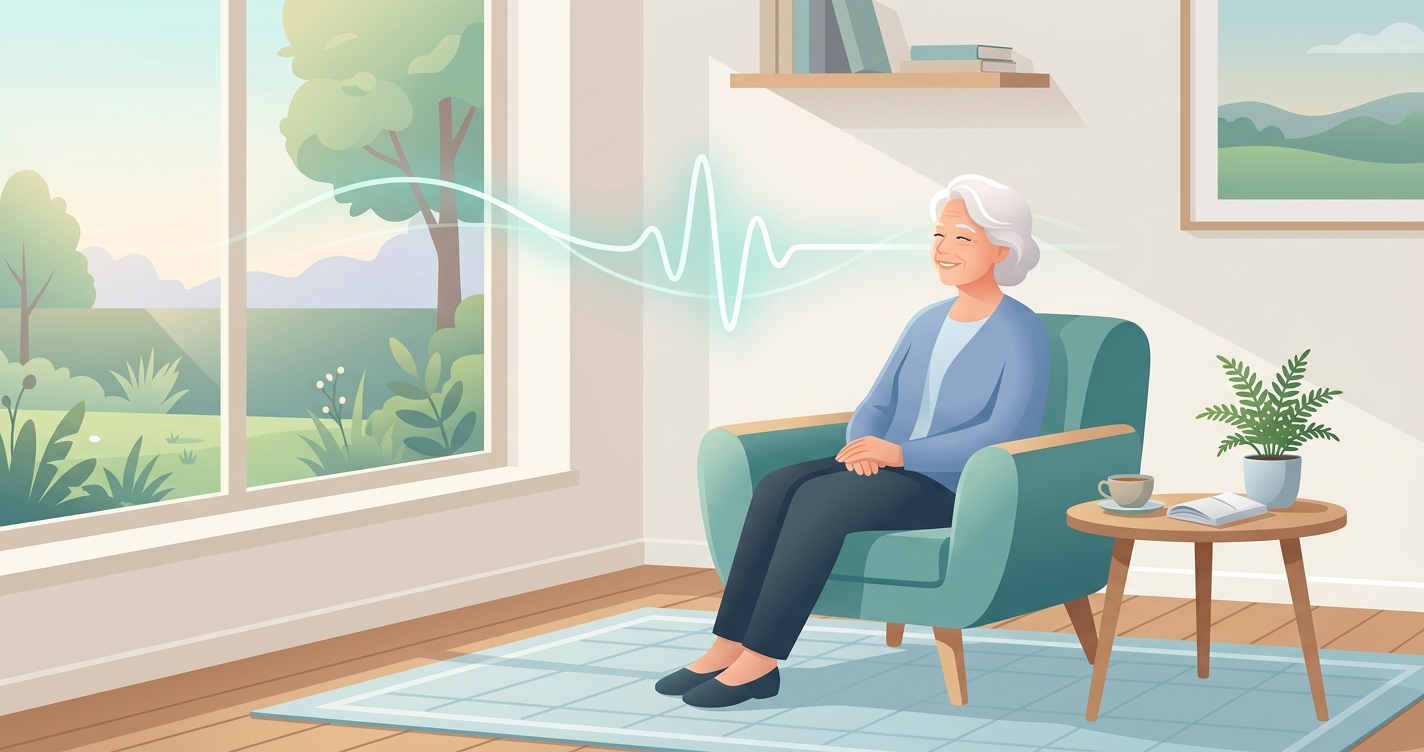
If your 78-year-old mother keeps falling asleep in her chair by mid-afternoon, naps longer than she used to, or simply says she feels worn out for no obvious reason, the instinct to worry is well placed. New or worsening fatigue in an older adult is rarely just aging. It is one of the body's least specific but most reliable signals that something underneath has shifted. The hard part for families is that fatigue can mean a dozen different things, and a single phone call or weekend visit cannot tell you which one. This is where tracking elderly vital signs at home moves from a nice idea to a practical tool: consistent daily data turns a vague feeling of "she seems off" into something you can actually act on.
A 2023 comprehensive review of fatigue in older adults found that tiredness is among the most common presenting complaints in geriatric care, yet it is frequently dismissed as normal aging despite being driven by treatable conditions in a large share of cases.
What elderly vital signs at home can reveal about sudden fatigue
Fatigue is a symptom, not a diagnosis. In older adults it sits at the intersection of several treatable problems, and the value of monitoring elderly vital signs at home is that different causes leave different fingerprints in the data. A resting heart rate that has crept up over two weeks, a breathing rate that is slightly faster than usual, or a sleep pattern that has fragmented can each point toward a specific underlying issue before your mother ever uses the word "tired."
Researchers writing in American Family Physician (2017) and in a 2023 review in the geriatric literature outline the most common drivers of fatigue in seniors:
- Anemia, often from nutritional deficiency, chronic disease, or slow gastrointestinal bleeding
- Infection, including urinary tract infections that present atypically with tiredness or confusion rather than classic symptoms
- Heart failure, where shortness of breath and swelling can be less obvious than pervasive exhaustion
- Thyroid disorders, diabetes, and kidney disease
- Polypharmacy, where multiple medications interact and produce drowsiness
- Depression and disrupted sleep, which often hide behind physical complaints
The clinical point that matters most for caregivers comes from the work on urinary tract infections in older adults summarized in StatPearls and American Family Physician (2020): in seniors, an infection may show up first as fatigue, confusion, or a drop in normal activity, with a low-grade fever, a faster heart rate, or even an unusually low temperature appearing in the vital signs before anyone connects the dots.
How fatigue maps to measurable signals
The table below shows why a single observation rarely tells the full story, and why a trend across several vital signs is more useful than any one number on its own.
| Possible cause of fatigue | Vital sign or activity pattern that may shift | Why daily tracking helps |
|---|---|---|
| Early infection (e.g. UTI) | Rising heart rate, low-grade fever or low temperature, reduced movement | Atypical presentation means fatigue often precedes obvious symptoms |
| Heart failure worsening | Elevated resting heart rate, faster breathing, restless sleep | Subtle changes appear days before a crisis |
| Anemia | Higher resting heart rate, lower activity tolerance | Gradual onset is easy to miss without a baseline |
| Medication side effect | Daytime sleep increase, slowed activity | Timing against a med change becomes visible |
| Depression or poor sleep | Fragmented sleep, later rising, withdrawal from routine | Activity and sleep data surface behavior shifts |
The recurring theme is the baseline. Without knowing what is normal for your mother specifically, a heart rate of 88 means nothing. Measured against her usual resting rate of 72 for the past month, that same number becomes a question worth asking her doctor.
Industry applications of daily monitoring for senior fatigue
For family caregivers
Most adult children manage a parent's health from a distance, relying on phone calls and the occasional visit. The problem is that seniors frequently underreport. A mother who does not want to alarm her children, or who has normalized her own decline, will say "I'm fine" while sleeping fourteen hours a day. Daily monitoring of elderly vital signs at home gives families an objective second opinion. Instead of debating whether to drive three hours to check in, a caregiver can see whether resting heart rate and activity have genuinely changed, and bring real data to a clinician.
For home health agencies and PACE programs
For organizations managing large panels of frail older adults, fatigue reported during a scheduled visit is a snapshot that may already be days behind the underlying change. Continuous data between visits lets nurses and care managers triage. A scoping review of remote patient monitoring for older adults published in 2024 (PMC) found that monitoring physiological parameters at home supports earlier intervention and is associated with reduced hospital readmissions and emergency department visits for chronic conditions such as heart failure and COPD. For PACE programs operating under full financial risk, catching a deteriorating member early is both a clinical and an economic win.
For senior living operators
In assisted and independent living, staff cannot watch every resident around the clock. Passive monitoring that flags a resident whose sleep has fragmented or whose resting heart rate has climbed lets a finite nursing team focus attention where it is needed, rather than discovering a problem only after a fall or an ambulance call.
Current research and evidence
The evidence base for home monitoring of seniors has matured quickly. The 2024 scoping review of remote patient monitoring for older adults (PubMed) concluded that home tracking of vital signs enables timely intervention and can reduce hospitalizations, while also noting practical barriers around device usability and equitable access. Usability is not a small footnote. The same body of work that praises wearables also documents that older adults often resist charging devices, wearing bands, or pressing buttons.
That tension has pushed interest toward contactless measurement. A 2023 review of remote photoplethysmography (rPPG) in the journal Electronics (MDPI) reported that camera-based methods can estimate heart rate and respiration without any contact, though accuracy depends on lighting, movement, and skin tone, and validation against medical-grade devices is ongoing. The appeal for senior care is direct: a measurement approach that asks nothing of the user removes the single biggest reason older adults abandon health technology.
On the clinical side, the fatigue literature reinforces why any of this matters. The 2023 review of fatigue in older adults stressed that tiredness is multifactorial and demands comprehensive assessment, while the UTI research highlights how often serious problems hide behind nonspecific symptoms. Together they make the case that watching trends, not waiting for a complaint, is the more reliable path to early detection.
The future of elderly vital signs at home
The direction of the field is toward monitoring that is passive, continuous, and interpreted by software that learns each person's baseline. Rather than handing families a stream of raw numbers, the next generation of tools aims to flag deviations from an individual's norm and translate them into plain guidance: her resting heart rate has been elevated for four days, consider a check-in. As machine learning models trained on large datasets improve, the goal is to predict deterioration earlier and reduce false alarms, the two factors that determine whether caregivers trust and keep using a system. The combination of contactless measurement and trend-based alerting is likely to define how aging in place is supported over the next decade.
Frequently asked questions
Is increased tiredness in a 78-year-old just normal aging?
Not necessarily. While energy does decline gradually with age, a noticeable increase in fatigue over days or weeks is often a sign of a treatable condition such as infection, anemia, heart issues, or a medication effect. Geriatric guidance treats new or worsening fatigue as a symptom that warrants assessment rather than something to ignore.
What vital signs are worth tracking when a senior seems unusually tired?
Resting heart rate, breathing rate, temperature, and patterns of sleep and daily activity are the most useful. The single most important factor is having a baseline, because a change from a person's own normal is far more informative than any individual reading compared to a generic range.
How quickly can monitoring detect a developing problem?
It depends on the condition, but research on remote monitoring suggests measurable shifts in vital signs often appear several days before an obvious crisis. Atypical infections in seniors, for example, may show a rising heart rate or temperature change while the only outward sign is fatigue.
Does monitoring require my mother to wear a device?
No. Contactless options based on camera measurement can estimate heart rate and breathing without wearables, charging, or buttons, which removes the main reason many older adults abandon health technology.
Circadify is building toward exactly this future, with non-intrusive daily health checks designed for seniors who will not wear or charge a device. If you are caring for a parent or running a senior care program and want to understand changes like unexplained fatigue before they become emergencies, explore how a senior care program built on contactless monitoring can help you act on the signals that matter.